
Last updated: July 2026
This guide is designed for travellers, day visitors, and locals looking for practical information about places to visit across the Western Cape. Available in multiple South African and international languages via browser translation.
On this page, Jump to:
Towns, Beaches, Maps, and Practical Information
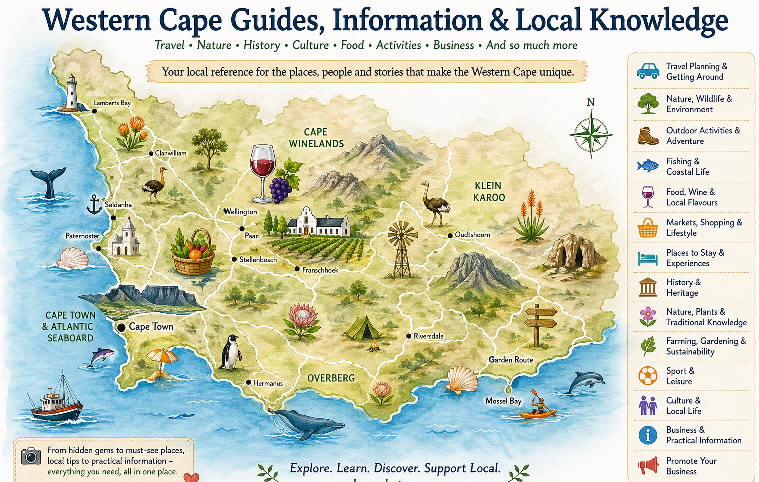
The Western Cape offers a wide range of landscapes, towns, and activities, from coastal villages to inland mountain regions. This page brings together towns, beaches, activities, and practical information to help you plan your time in the Western Cape. Key activities are highlighted. Each section links to more detailed guides covering specific places, topics, and pages across the region.
There is a focus on practical information. You will find towns and suburbs, places to visit, and useful details such as parking, facilities, emergency numbers, weather, and transport basics.
Weather in Cape Town and the Western Cape
Interactive map of Western Cape towns
Explore the Western Cape by Region
Cape Town and Surrounds
Here is a complete list of suburbs in the Greater Cape Town Municipality. Click on any suburb, and you will be taken to a page with information about each place, including history, things to see and do, transport options and phone numbers for local emergency services and other useful contacts.
Beaches to visit in Cape Town
The lists of beaches in the area include information about parking, tides, dog policies, lifeguards, and ablution facilities.
Browse the beaches by area:
Things to see and do in the City of Cape Town Metropole
Visit each suburb to see a complete list of things to see and do in each place, plus emergency contacts, useful numbers, schools and a link to the listings attached to each suburb.
Here are some popular options:
-
-
- Things to see and do in Cape Town city
- Hikes and Walks in Cape Town
- Museums in Cape Town
- Markets in Cape Town
-
Visit the listings categories to find things to see and do in the Southern Suburbs, the Northern Suburbs and the South Peninsula
Cape Winelands
Browse a comprehensive list of all the main towns and suburbs in the Winelands, with a short description. Each town page includes history, things to do, and useful contact numbers.
Click on the links below to find lists of things to see and do in the Winelands
- Discover over 750 wine farms in the Western Cape
- Nature reserves in the Winelands
- Other Activities and Attractions in the Winelands
- All listings in the Winelands are filtered by category and tags
-
Overberg
The Overberg includes coastal and inland towns. The area is known for agriculture, nature reserves, and seasonal whale watching. Browse the complete list of Overberg towns. Each town page includes history, things to do, and useful contact numbers. There are beautiful beaches along the coast. The inland towns and villages are agricultural, mostly fruit, olives and wine. There are some wonderful nature reserves in the Overberg and also some great trails for hiking, mountain biking, and scenic drives.
-
-
- Museums – local history, whales, and agriculture
- Wine farms – established estates and regional wines
- Nature reserves – flora, wildlife, and walking trails
- Beaches– Some great whale watching sites
- All listings in the Overberg region
-
Garden Route and Eden
The Garden Route is well known internationally as one of the world’s great road trips. View Towns and villages in the Garden Route and Eden region here. Access detailed pages with local information, attractions, and emergency contacts. There are great hiking and biking trails in the area, including mountains, forests and coastal routes. Interactive map of the Garden Route with links to towns along the way.
-
-
- Hikes and Walks along the Garden Route
- Museums to see in the Garden Route Region
- Beaches along the Garden Route, including tides, safety, parking and surf reports.
- Nature Reserves in the Garden Route area.
- Golf courses in the Eden and Garden Route Region
-
West Coast
The West Coast includes a mix of fishing villages, agricultural towns, and seasonal wildflower areas. Towns and suburbs in the West Coast Region can be viewed in this list, with links to detailed guides and practical information for each area.
The settlements along the coast are mostly centred around the fishing trade. There are lots of interesting places to see, and a lot of fascinating histories of ghosts and shipwrecks. Inland, the settlements are agricultural, focusing on wheat and cereals, but there are also wine and olive farms in the region. The West Coast is well known for the fabulous displays of wildflowers in spring.
-
-
- West Coast beaches, these listings include information about parking, fishing, dog policies and safety.
- Golf courses, descriptions of the links and contact details
- Wine farms, what you will find, plus contact details
- Nature Reserves, from rock formations to wildflowers
- Camping, there are great camping and caravan spots along the West Coast
- Museums, A great variety of museums covering fishing, wheat growing and local history
- Farm stalls, find a selection of roadside stalls with restaurants and local produce
- Caves, mountains, some incredible rock formations, and evidence of ancient history.
- Route 27 The West Coast Road
- All West Coast listings
-
Karoo
These are the main towns in the Central Karoo
In spite of the sparse landscape, there is plenty to see and do in the Karoo, from ancient fossils to quaint historical villages. Stargazing is rewarding as the skies are clear and away from the city lights
Things to Do in the Western Cape
There is a wide range of activities across the Western Cape, from outdoor experiences to cultural attractions, markets, and nature reserves. These guides focus on practical details to help you plan where to go and what to expect
Outdoor Activities
-
-
- Beaches – complete listings with parking, safety information, and sea conditions
- Coastal and mountain hikes, suburban guided walks – routes for different fitness levels
- Rock pools – where to go and what you may find
- Fishing spots, best places for freshwater and ocean angling
- Stargazing in the Western Cape – where to view the night skies
-
Places to Visit
-
-
- Nature reserves – biodiversity hotspots and protected areas
- Gardens – public and botanical gardens across the region
- Museums – over 170 museums covering history, culture, and local stories
- Markets and small businesses – regular craft and farmers’ markets
-
Scenic Travel
-
-
- Road trips and scenic drives – short routes and multi-day journeys
- Dams in the Western Cape – key water sites with access and viewing points
- Coastal and mountain walks and hikes. Some for the fit, and some for the not-so-fit.
- Heritage and historical sites. Find details about interesting buildings and natural features
-
These practical illustrated guides can help you identify
what you see and catch
-
-
- Fishing – freshwater fish and ocean species illustrated identification guides
- Seashell guide – shells commonly found on Western Cape beaches and where to look
- Wildlife guide – animals you may encounter while hiking or travelling
- Snakes in the Western Cape – identification and safety information
- Fynbos – a simple guide to the region’s plant life
-
Nature and Outdoors
The Western Cape is known for its natural environments, including the mountains and for its biodiversity. Browse the listings when you click the links below.
-
-
- Dams in the Western Cape (Article)
- Rivers and dams in the Western Cape (List)
- Mountains in the Western Cape
- Bridges, roads and tunnels
- Beaches. List of beaches, filter by region and tags
- Tidal pools and public swimming pools. Places to cool off in summer.
- Hiking and Walking trails.
- Best fishing spots: Freshwater fishing,/ Ocean fishing
-
History and Culture
The region has a layered history, reflected in towns, landmarks, and cultural traditions. Recorded history began in the 1400s with the first European explorers. Still, there is evidence of ancient cultures living across the Cape, from coastal middens to artefacts and cave paintings found further inland.
-
-
- First people of the Western Cape
- Dutch East India Company in the Western Cape
- Shipwrecks along the coastline
- Short biographies of some notable people
- Origin of the Griqua people
- The purchase of the Cape
- The French Huguenots
- Mining and minerals in the Western Cape
Wars and conflicts
- The Anglo-Boer War
- The Battle of Muizenberg
- The Battle of Salt River
- The Battle of Blaauwberg
-
Practical Information for the
Western Cape
-
-
-
- Cape Town and the Western Cape emergency numbers
- Resources: Regulations, permits and safety advice
- Weather and seasons in Cape Town and the Western Cape.
- Transport basics: Information on public transport and links to taxis and shuttle services
- Tips for travellers to the Western Cape, including visas, car hire, money and other practical tips.
- Local terminology and slang: and how to say thank you in local vernacular!
-
-
Popular and Useful Guides
-
-
- Western Cape number plates identification and regional codes
- Wine farms that children will enjoy. – family-friendly estates
- Seashell identification guide– illustrated coastal species
- Fishing in the Western Cape – freshwater and ocean guides with regulations
- Local Medicinal plants and healing practices
- Wildlife you may see on your hikes and drives around the Cape
- Illustrated guide to common snakes and what to do if you see one.
- Fynbos, a short introduction
- Whales and Dolphins, species and where you can see them.
- Shipwrecks along the coast, and the lighthouses built to prevent them
-
Frequently Asked Questions
1. What is the best time to visit the Western Cape?
There are things to do year-round. November to February is best for beaches and outdoor activities. July to October is ideal for whale watching. Winter is quieter, with lower prices and good conditions for wine tasting and indoor activities. Summer is the peak season.
2. What is the weather like in the Western Cape?
The Western Cape has a Mediterranean climate with dry summers and wet winters. The weather can change quickly, especially in Cape Town, due to wind and coastal conditions. Temperatures vary between regions, with inland areas often hotter in summer and colder in winter.
3. How many days do you need to explore the Western Cape?
Anything from 3 days to 2 weeks. In three days, you can include most of the main attractions in Cape Town, and in a few more days, you can visit the winelands and the Overberg. If you stay a bit longer, you can also do a road trip like The Garden Route or Route 62, which need at least 5 days each.
4. Do you need a car to travel in the Western Cape?
A car is the most flexible way to explore the region. It allows easy access to beaches, small towns, and nature reserves. Shuttle services, private tours, and taxis are available, and Uber operates in larger towns. Public transport is limited outside main urban areas. See our guide to Getting around the Western Cape.
5. Is it safe to travel around the Western Cape?
Yes, travel in the Western Cape is generally safe. Roads and services are reliable. As with any destination, avoid unfamiliar or isolated areas at night and follow local advice. Accommodation hosts can usually guide you on safe areas and travel routes.
6. What are the main regions of the Western Cape?
The main regions include Cape Town, the Cape Winelands, the Overberg, the Garden Route, the West Coast, and the Karoo. Each region has its own landscapes, towns, and activities. See the regional guides on this page for more details.
7. Where are the best beaches in the Western Cape?
Beaches in the Western Cape are varied; some are good for surfing, windsurfing and kite flying, others for swimming or some just for sunbathing, shell collecting and walking; some are great locations for fishing. See the guide near the top of this page.
8. Can you visit wine farms with children in the Western Cape?
Yes, many wine farms in the Western Cape are family-friendly and welcome children. These estates often provide activities designed to engage younger visitors, such as playgrounds, petting zoos, and spacious gardens for exploration. Additionally, some wineries offer non-alcoholic beverages and child-friendly menus, ensuring that families can enjoy their visit together. Our Winefarms that children will enjoy article lists some of these places.
9. What should you pack for a trip to the Western Cape?
The weather is usually mild but quite changeable. It is best to layer your clothing. Always have a jacket (preferably somewhat wind-resistant), as the weather gets quite windy sometimes and consequently fairly chilly. Cape Town weather: why it is so changeable.
10. Are there free things to do in the Western Cape?
Most beaches, hikes and markets are free to visit and explore. Some museums and heritage sites work on a donation basis. There are a lot of activities that are free on your birthday, and in many places, pensioners’ discounts apply.
11. Where can you see whales in the Western Cape?
Hermanus is known as the whale-watching capital, but whales can also be seen along much of the Overberg coast. The best time is usually between June and October. See the whale watching guide for viewing points and species information.
12. What are the best road trips in the Western Cape?
Popular routes include the Garden Route, Route 62, the West Coast road, and Clarence Drive. These routes pass through coastal towns, mountain passes, and rural areas. See the scenic drives section for detailed routes and stops.
Colourdots is an independent Western Cape regional information resource. Learn more about the site here.
