The Garden Route
The Garden Route: A Flexible Exploration,
Not Just a Route
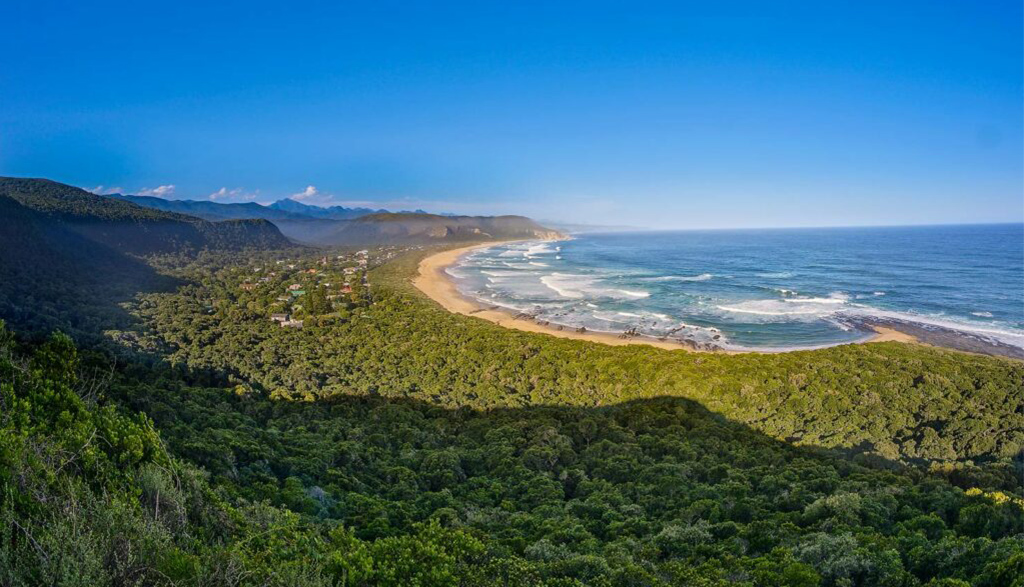
The Garden Route is one of South Africa’s most scenic travel regions, stretching along the south coast of the Western Cape. Known for its beaches, forests, lagoons, and mountain passes, it is a popular road trip for both local and international visitors. It is one of South Africa’s most scenic and ecologically diverse regions. Although often referred to as a “route,” it’s better described as an area to explore rather than a linear journey. Instead of driving straight through, visitors can make the most of their trip by choosing one or two bases and travelling to nearby attractions from there.
The Garden Route is about a 5–6-hour drive from Cape Town, depending on your starting point and stops along the way.
Interactive map of the Garden Route.
Open the map and click on the red dots to open a page of information about the town you selected
The route is not just a road trip – it’s an immersive experience in one of the most beautiful and biologically rich regions in the world.
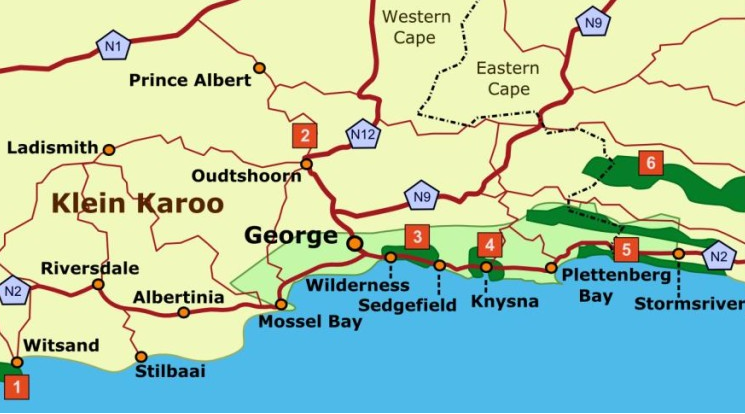
The exact boundaries of the Garden Route are subject to variation. Generally, it is understood to stretch from Mossel Bay in the Western Cape to Storms River on the border of the Eastern Cape. It covers about 300 km. Inland, it reaches as far north as Oudtshoorn and the Swartberg Mountain Range. However, the route can begin as far West as Witsand. The region includes dramatic coastlines, dense forests, winding rivers, rugged mountains, and peaceful beaches.
Best stops along the Garden Route
Mossel Bay – Great Brak River – Little Brak River – George – Wilderness – Sedgefield – Knysna – Plettenberg Bay – Nature’s Valley – Oudtshoorn – Albertinia – Gouritsmond – Stilbaai – Riversdale – Heidelberg, and Witsand
Click each one to find out more about each place, or use the interactive map to see where they are on the route
The best time to go
The weather is generally mild year-round. Coastal temperatures range between 10˚C and 29˚C, with no fixed rainy season (though June–August may see slightly more rain). The best time to visit is from September to March, when the days are long and warm. Still, it’s wise to pack some warm clothes.
The Garden Route offers something for everyone – from families with children to solo adventurers, beach lovers, foodies, and nature enthusiasts.
You don’t need a 4WD for the trip. A standard sedan or hatchback will work, and there’s usually a petrol station along the N2 every couple of hours and many in each stop. Petrol/service stations often include restrooms and often have convenience stores attached.
Some towns along the Garden Route
Mossel Bay is usually considered the starting point of the route. This is where the first European landed in South Africa. Explore the Dias Museum Complex, St. Blaize Lighthouse, and the caves below Pinnacle Point. The coastline is rocky, but there are several great swimming spots and sheltered coves. From Mossel Bay, you can choose to detour and follow Route 12 and The Fragrance Route
George is often called the “Gateway to the Garden Route.” It lies between the Outeniqua Mountains and the coast and features historical sites like the Slave Tree, the King Edward VII Library, and the Outeniqua Transport Museum. The Garden Route Botanical Gardens is worth a visit, and keen golfers will know of Fancourt, one of the world’s best courses.
Oudtshoorn, inland, marks the northern boundary of the Garden Route. It is on the edge of the Klein Karoo. The area is famous for ostrich farms and the Cango Caves. These caves are massive limestone caverns with ancient formations. The area reflects a shift from coastal fynbos to semi-arid landscapes.
Wilderness is a peaceful village on the Touw River Lagoon. The Wilderness National Park protects 2,500 hectares of forest, rivers, and coastline. Visitors can hike to waterfalls or kayak in the rivers. The birdlife is spectacular, and the area is also a great whale-watching location. Between Wilderness and Knysna is Sedgefield, with a slower pace and beautiful beaches and calm waters bordering the Goukamma Nature Reserve. It is a quieter seaside town that is ideal for families.
Ghost story
A long-standing story linked to the Garden of Eden near Knysna tells of a mysterious woman said to appear briefly inside passing vehicles before vanishing without explanation. The tale is often connected to violent attacks on settlers travelling through the forests during the early 1800s, when several people were reportedly killed or taken captive along the route.
Knysna is famous for the lagoon and the indigenous forests. The original Seven Passes Road from George to Knysna is a scenic drive crossing rivers and gorges. Forest trails feature Outeniqua yellowwoods and Cape chestnuts. The town has a strong arts scene and wonderful restaurants. Plettenberg Bay is loved for its long beaches, whale and dolphin watching, and the Robberg Peninsula, which is home to Cape fur seals.
Tailor your experience
The Garden Route offers incredible flexibility. Whether you’re after wild coastlines and forest hikes, local art and food, or quiet beaches and luxury stays, you can build an itinerary to match your style. Choose a town or two as your base, and from there, take day trips to nearby attractions, parks, and towns. See the listings attached to the “Towns and Suburbs” pages to get some ideas of places to see along the way. Many visitors choose to base themselves in towns like Knysna or Plettenberg Bay.
The Western Cape is home to hundreds of bird species. For full identification and seasonal details, see this comprehensive Western Cape bird guide.
You may encounter local wildlife along the way. See our Western Cape Wildlife Guide for species commonly found in gardens, mountains and along the coast
See some other scenic drives and road trips and browse the complete Western Cape guide
FAQs about the Garden Route
1. What is the Garden Route?
The Garden Route is a scenic stretch of South Africa’s south coast, running from Mossel Bay to Storms River. It’s famous for its beaches, forests, lagoons, and mountain passes.
2. How long is the Garden Route?
It’s about 300 km long, following the N2 highway through towns like George, Wilderness, Knysna, Plettenberg Bay, and Nature’s Valley.
3. How do I get to the Garden Route?
Most travellers start in Cape Town or Port Elizabeth (Gqeberha). You can drive the N2, take a bus, or fly into George Airport, which is centrally located.
4. How many days do you need for the Garden Route?
Allow at least 3 to 5 days to enjoy the highlights. A week gives you time to explore more beaches, forests, and mountain passes at a relaxed pace.
5. What are the must-see stops on the Garden Route?
Popular stops include Mossel Bay, Wilderness, Knysna, Plettenberg Bay, Tsitsikamma National Park, and Storms River Mouth.
6. Is the Garden Route safe to drive?
Yes. The N2 is well-maintained and clearly marked. Drive carefully through smaller towns and mountain passes, especially in wet weather.
7. When is the best time to visit the Garden Route?
The region has mild weather year-round. From September to April is warm and ideal for beaches and outdoor activities. Winter (June–August) is good for hiking and whale watching.
8. Are there tolls along the Garden Route?
There are no major toll gates on the main N2 section between Mossel Bay and Storms River.
9. Can I see wildlife on the Garden Route?
Yes. You can visit several reserves and also the smaller sanctuaries for elephants, birds, and monkeys. See Colourdots listings.
10. What activities can I do on the Garden Route?
Top activities include hiking, kayaking, surfing, paragliding, zip-lining, whale watching, and bungee jumping from Bloukrans Bridge — the world’s highest commercial bungee.
11. Are there beaches along the Garden Route?
Yes. There are many safe swimming beaches, including Victoria Bay, Wilderness Beach, Buffalo Bay, and Keurboomstrand.
12. What should I pack for the Garden Route?
Bring comfortable clothes, swimwear, hiking shoes, sunscreen, and a light jacket. The weather can change quickly, especially near the mountains.
Updated November 2025