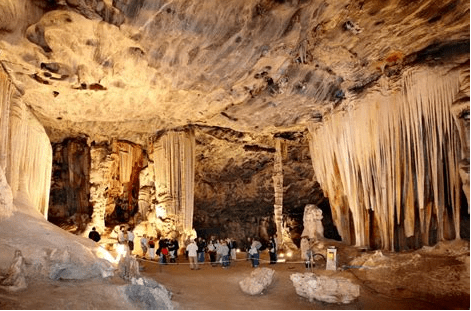
Cango Caves
The Cango Caves are located in Precambrian limestone at the foothills of the Swartberg range. The principal cave is one of the country’s finest and best-known. The caves are South Africa’s oldest tourist attraction, and they attract many visitors. The entrance to the cave was discovered in 1780 by a farmer, Jacobus Van Zyl, and his herdsman who were looking for lost cattle. He was lowered down into a chamber that was found to be as long as a football field, and is named Van Zyl Hall in his honour.
Further exploration was done, and a second chamber was discovered in 1792. The caves soon became a popular place to visit. People have been visiting the caves since the 1800s. The Cango caves are frequently described as one of the great Natural Wonders of The World, and they are the biggest show cave system in Africa. They are unique and would not have normally formed in this area, but are a result of faulting.
There is evidence that they have been inhabited since the Early Stone Age. There are cave paintings at the entrance; unfortunately, many have been destroyed and defaced. The caves began to be formed in crystalline limestone about 100 million years ago.
-33°23’34.80″ S 22°12’54.00″ E
How Long Do You Need to Visit the Cango Caves?
You need about 60–90 minutes for a standard visit to the Cango Caves.
Heritage Tour (most popular)
Duration: 60 minutes. This is an Easy walk for all ages, you will see the main chambers and is Guided and informative
Adventure Tour
Duration: 90 minutes, this includes narrow passages and climbing and is a bit more demanding. There is limited availability, but it is not recommended if you get claustrophobic.
Is this your business?Claim it now.
Make sure your information is up to date.Colourdots is an independent Western Cape regional information resource. Learn more about the site here.