
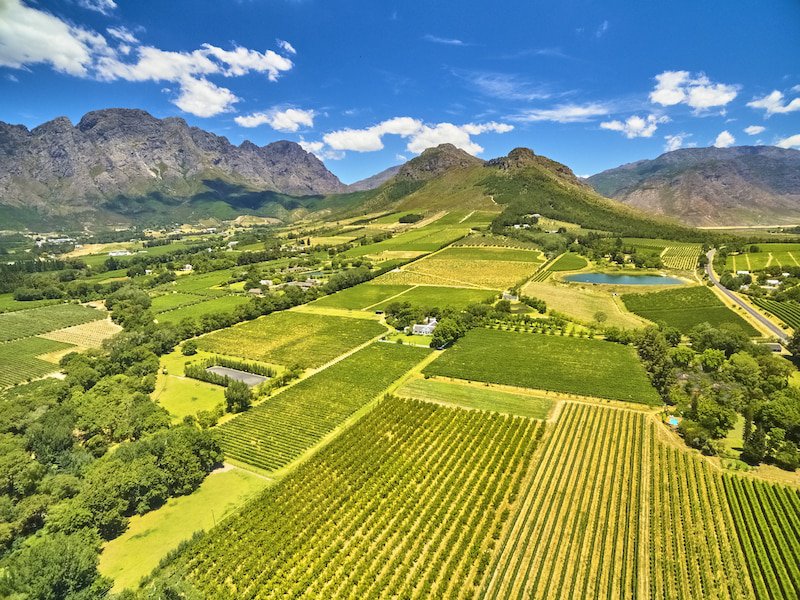
The Western Cape produces almost all of South Africa’s wine and is home to some of the oldest vineyards in the Southern Hemisphere. This guide explains how wine is grown and made, the major grape varieties, and the factors that make the region one of the world’s recognised wine-producing areas.
The History of Wine in the
Western Cape
The history of winemaking in South Africa dates back to 1655, when the first vines were planted at the Cape by Jan van Riebeeck. Four years later, in 1659, the first wine was produced from Cape-grown grapes. The wine was made from French Muscadel grapes.
Production was small, and the wine was initially intended only for export to the trading port of Batavia. The industry expanded under Governor Simon van der Stel, who established the Constantia estate and founded Stellenbosch. The arrival of the French Huguenots in 1688 brought valuable viticultural knowledge that helped shape the future of South African wine. Their expertise helped establish and improve the wine industry, particularly in areas such as Franschhoek, which remains one of South Africa’s best-known wine regions.
Where the Original Vines Came From
The first grapevines planted at the Cape were imported from Europe by Dutch settlers during the 17th century. Over time, additional vine varieties arrived from countries such as France, Spain, Germany, Portugal and Italy, forming the foundation of South Africa’s wine industry.
Many of the cultivars grown in the Western Cape today trace their origins to these European grape varieties. Over centuries, growers adapted vineyard practices and selected vines suited to local soils and climatic conditions, creating the diverse wine regions and distinctive wine styles found in the province today.
Why the Western Cape is Ideal for Wine
The Western Cape has a Mediterranean climate characterised by cool, wet winters and warm, dry summers. These conditions allow vines to build up during the winter rainfall while ripening grapes slowly and evenly in the growing season, reducing disease pressure and improving flavour development.
Almost all of South Africa’s wine grapes are grown in this region, where mountains, varied soils and proximity to the ocean create highly diverse growing conditions. Cooling sea breezes help moderate summer heat, particularly in coastal vineyards, allowing grapes to retain natural acidity while developing balanced flavours and aromas.
Climate, soil and topography all influence how grapes ripen. Cooler areas tend to produce longer growing seasons and more elegant wines, while warmer inland regions often produce fuller-bodied styles. In general, vines perform best in well-drained soils where moderate stress helps concentrate flavour.
Wine Regions and Their Climates
The Western Cape’s diverse climates allow different grape varieties to thrive: cooler regions are known for fresh, elegant wines, while warmer areas produce fuller-bodied wines.
The Western Cape is home to several wine regions, each shaped by its own climate, soils and geography. Well-known areas include Constantia, Stellenbosch, Paarl, Franschhoek, Durbanville, Swartland, Elgin, Bot River, Hemel-en-Aarde and the Cape Agulhas district, with each region producing distinctive wine styles and grape varieties suited to local growing conditions.
Harvesting the Grapes
The decision on when to harvest is critical. Unlike other fruits, grapes do not continue to ripen after being picked. The ideal window for picking spans just a few days, and getting the timing right determines everything about the end product.
Grapes can be harvested by hand or by machine. Hand harvesting involves workers cutting grape bunches from the vines and placing them carefully into containers. This method allows pickers to select only the best fruit and avoid damaged or unripe grapes.
Mechanical harvesters move through vineyard rows and shake the vines, causing the grapes to fall onto collection belts. This method is much faster and can harvest large areas quickly making it suitable for larger vineyards.
Both methods have advantages. Machine harvesting is efficient and reduces labour costs. Hand harvesting allows greater control over grape quality. Many premium wines are made from hand-picked grapes, although both methods are widely used in the local wine industry.
What Happens at the Cellar
Once harvested, grapes are sorted, crushed and fermented. Depending on the style of wine being produced, the wine may then be matured, blended, stabilised and bottled before being released for sale.
Red Wine vs White Wine
The main difference between red and white winemaking is how the grape skins are used. White wine is made by pressing the grapes and fermenting the juice, while red wine is fermented with the skins, which give it its colour, tannins and much of its flavour.
After fermentation, wines may be matured in stainless steel tanks, oak barrels or other vessels before being clarified, bottled and sealed. The choice of grape variety, fermentation method and maturation process all influence the final style of the wine.
At this stage, wine often contains tiny particles of grape skins, yeast and other natural sediments that can make it appear cloudy. Clarification is the process of removing these particles to produce a clearer, more stable wine. This may be done by allowing sediment to settle naturally, transferring the wine to another container, filtering it, or using natural fining agents that help unwanted particles clump together and sink to the bottom. While clarification improves appearance, it also helps create a cleaner flavour and ensures the wine remains stable in the bottle
Common Grape Cultivars in the Western Cape
White wine
Chardonnay:
A versatile white grape variety used to produce a wide range of wine styles, from fresh and unoaked wines to rich, barrel-aged wines.
Chenin Blanc:
South Africa’s most widely planted wine grape. Chenin Blanc produces a range of styles, from fresh and fruity wines to rich, complex wines suitable for ageing.
Sauvignon Blanc:
A white grape variety known for its crisp acidity and flavours that can include citrus, tropical fruit and herbaceous notes.
Semillon:
A white grape variety historically important in the Western Cape, often producing rich wines with good ageing potential
Red wine
Shiraz (Syrah):
A popular red grape variety known for producing full-bodied wines with flavours of dark fruit, spice and pepper.
Cabernet Sauvignon:
One of the world’s most widely grown red grape varieties. Cabernet Sauvignon is known for its structure, tannins and ageing potential.
Merlot:
A red grape variety that generally produces softer, fruit-driven wines with smooth tannins.
Pinotage:
A South African grape variety created by crossing Pinot Noir and Cinsault in 1925. It is regarded as South Africa’s signature red wine cultivar.
Pinot Noir:
A red grape variety that thrives in cooler climates and is valued for its elegance, delicate structure and red fruit flavours.
Cinsault:
A red grape variety widely grown in South Africa and one of the parent grapes used to create Pinotage.
Oak Barrels and Maturation
Oak barrels are often used to mature wine, influencing its flavour, aroma, texture and ageing potential. During maturation, the wine interacts with the wood, which can add characteristic flavour notes such as vanilla, spice, toast or smoky, while helping to soften tannins and develop complexity.
French oak generally produces subtler, more refined flavours, while American oak often contributes bolder notes such as vanilla and sweet spice. The age, size and toast level of the barrel also affect the final character of the wine.
Not all wines are matured in oak. Many winemakers use stainless steel tanks to preserve fresh fruit flavours and natural acidity. Other vessels, such as concrete tanks and clay amphorae, may also be used to influence texture and wine development without adding oak flavours.
Corks vs Screw Caps
Wine bottles are commonly sealed with either natural corks or screw caps. Cork has been used for centuries and remains the traditional choice for many premium wines. It is a natural, renewable product and has a long history of successful wine ageing.
Screw caps became popular during the second half of the 20th century as an alternative to cork. They are easy to open, are re-sealable, and they provide a reliable closure and eliminate the risk of cork taint, a fault caused by contamination of natural cork.
While corks were once believed to be superior because they allowed wine to “breathe”, modern research has shown that both corks and screw caps can effectively preserve and age wine. Today, the choice often comes down to the winemaker’s preference, the style of wine and the intended ageing period.
Old Vines in the Western Cape
In South Africa, vines that are 35 years or older may be recognised as old vines. These mature vineyards typically produce lower yields but are often valued for the concentration, complexity and character of their fruit
Wine of Origin System
South Africa’s Wine of Origin (WO) system was introduced in 1973 to protect both producers and consumers by verifying where a wine’s grapes were grown. When a bottle is labelled W.O. Stellenbosch, W.O. Constantia or W.O. Robertson, it means that 100% of the grapes used to make the wine came from that designated area.
The system recognises different geographical levels, ranging from broad regions and districts to wards, estates and single vineyards. This helps consumers identify the origin of a wine and the unique environmental conditions that influence its character.
South Africa has hundreds of wineries. The South African wine industry produces approximately 820 million litres of wine annually. More than 50% of our total wine production is exported, and of that, more than 50% is exported in bulk.
Wine terminology can be confusing. Our Wine Glossary explains common terms in plain language.
Also see the article with a list of wine farms that children will enjoy
Main Wine Producing Areas and Wine Routes of the Western Cape
Browse more than 740 Western Cape wine farms by region. Find contact details, addresses, clickable phone numbers and winery information. Click the link to view a list of wine farms in each area. ( under construction)
Agulhas Triangle:
A small but distinctive wine region near Africa’s southern tip, known for cool maritime conditions and elegant wines. Learn more about L’Agulhas and the surrounding small towns
Bot Rivier
Botrivier is an emerging wine area producing characterful wines influenced by its cool climate and rolling hills. Read up on Bot Rivier
Constantia Wine Route
( including Cape Peninsula estates)South Africa’s oldest wine-producing region, including the historic estates of Constantia and selected Cape Peninsula vineyards. Browse more about Constantia
Darling,
This region is renowned for its cool Atlantic influence, producing excellent Sauvignon Blanc, Shiraz and other premium wines. Find out more to see and do in Darling.
Durbanville:
The rolling hills and cooling ocean breezes in this region create ideal conditions for quality red and white wines. Read about the history of Durbanville and find other things to see and do
Elgin
The cool climate and high altitude make Elgin one of South Africa’s leading regions for Chardonnay, Sauvignon Blanc and Pinot Noir. Read about the Elgin region and its rich history.
Franschhoek
Farms in this area combine centuries of winemaking heritage with some of the country’s most celebrated wine estates. Read about the history of Franschhoek and the people who founded it.
Klein Karoo
(Ladismith, Calitzdorp, Oudtshoorn) The Klein Karoo is famous for its port-style wines, unique terroir and scenic vineyards along Route 62. Browse towns in the Klein Karoo.
Paarl
This wine region is one of South Africa’s largest, producing a diverse range of award-winning wines. The town has an interesting history. Read about Paarl here.
Plettenberg Bay wine route
Included in The Garden Route Wine Farms. Plettenberg Bay’s coastal vineyards are best known for cool-climate wines and exceptional sparkling wines. Browse other things to see and do in Plettenberg Bay.
Robertson
The region’s limestone-rich soils and warm climate contribute to outstanding Chardonnay, Shiraz and Cap Classique wines. The town is part of Route 62. Read a short history of Robertson and find other things to see and do.
Route 62:
Route 62 is South Africa’s longest wine route, connecting several renowned wine-producing regions through spectacular scenery. Browse the towns along Route 62 and find out how they were established and see what else you can do in each place
Somerset West:
This area offers easy access to a collection of wine estates set between the mountains and the False Bay coastline. Browse the Somerset West history page and find other things to do in the town.
Stellenbosch:
This area is South Africa’s premier wine region, internationally recognised for its exceptional vineyards and winemaking excellence. Read a short history of the Stellenbosch area and find out more about the town.
Swartland and the West Coast
Swartland and the West Coast are known for innovative winemakers, old vines and distinctive Mediterranean-style wines. The region benefits from cool Atlantic breezes that help produce fresh, elegant wines. Explore some of the towns along the West Coast
The Garden Route
The region features a growing collection of wine farms producing cool-climate wines in a beautiful coastal setting. Read up on the route and find other places to see and things to do along the Garden Route
Tulbagh
Surrounded by mountains, Tulbagh is a picturesque wine region that produces a wide variety of high-quality wines. Read a short history of Tulbagh and find other things to do in the small town.
Wellington
Route 62: Wellington is renowned for its vineyards, historic wine farms and important role in South Africa’s wine and brandy industries. Browse the story of Wellington and interesting things to see in the town
Whale Coast
(Walker Bay and Hemel en Aarde) The Whale Coast is celebrated for world-class Pinot Noir, Chardonnay and spectacular ocean views. Explore towns in the Overberg district.
Worcester
Route 62: Worcester is one of South Africa’s largest wine-producing areas, known for its fertile valley and diverse wine styles. Browse the town of Worcester and find more interesting things to see there
.
- Colourdots is an independent regional information resource for the Western Cape.
Learn more about the project HERE
