
- Province: Western Cape
- Coordinates; 33°54′55″S “18°23′33″E
- Area; 1.58 km2
- Municipality; City of Cape Town
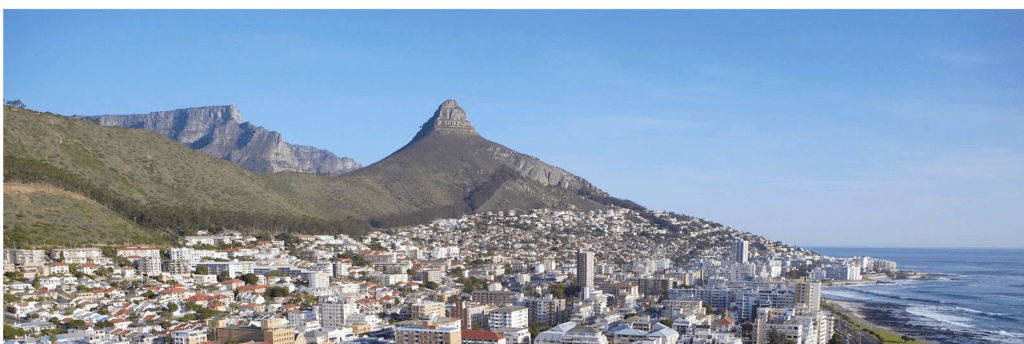
Sea Point is a coastal suburb of Cape Town in the Western Cape, located along the Atlantic Seaboard. It lies between Green Point and Bantry Bay, below Signal Hill. Sea Point is characterised by high-density residential areas, a rocky shoreline, and the Sea Point Promenade running along the coast.
History of Sea Point
Sea Point, located along Cape Town’s Atlantic Seaboard, developed from farmland into one of the city’s most densely populated suburbs. The area was originally part of Springbok Farm and was sparsely inhabited in the late 18th century.
The name “Sea Point” is believed to have originated in 1767 when Captain Samuel Wallis, one of Captain Cook’s commanders, encamped there with his men to escape a smallpox outbreak in Cape Town. Around the same time, a men’s club on the slopes of Signal Hill served as a social hub for Free Burghers, Dutch East India Company officials, and visiting Europeans.
In the early 1800s, a residential area began to form, mostly inhabited by European settlers. Among the first families were the Le Sueurs from Bayeux in Normandy. François Le Sueur, who arrived in 1739 as spiritual advisor to Governor Hendrik Swellengrebel, established the family estate Winterslust on the slopes of Signal Hill. The 200-acre property was later renamed Fresnaye.
Sea Point and Green Point were merged into one municipality in 1839, forming the Municipality of Green Point and Sea Point — the first borough outside central Cape Town.
Tramway to Sea Point
A horse-drawn tramway linked the area to Cape Town in 1862, and the railway line followed in 1905. The Cape Town and Green Point Tramway Company built housing for its diverse workforce in 1877. When the company closed in 1895, new residents moved in, and although segregation existed, the suburb was home to both white and coloured communities.
Racial segregation deepened in the 20th century. The 1902 Native Reserve Locations Act forced black men living in council housing to relocate to the Docks Location, and in 1957, all remaining people of colour were ordered to move.
Sea Point Baths
Sea Point’s recreational facilities also developed early. The Sea Point Baths, opened in 1895 for whites only, had separate bathing times for men and women. They were filled at low tide with a gas-powered pump. Unfortunately, they were destroyed by a storm in 1911 and replaced by the Sea Point Pavilion, which opened in 1914. The pavilion featured a tea room, outdoor cinema, and later underwent renovations to accommodate more visitors.
By the early 1900s, electricity and improved transport transformed Sea Point into a cosmopolitan suburb filled with Victorian and Edwardian homes, apartments, and hotels. The promenade, developed from the 1880s onwards, became one of the city’s most iconic public spaces. It is a popular venue for art displays, recreation, and coastal walks enjoyed by both locals and visitors.
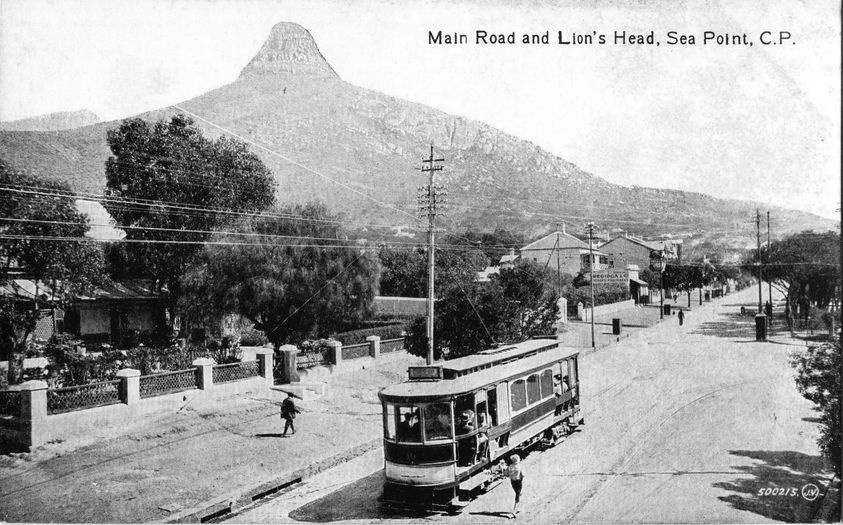
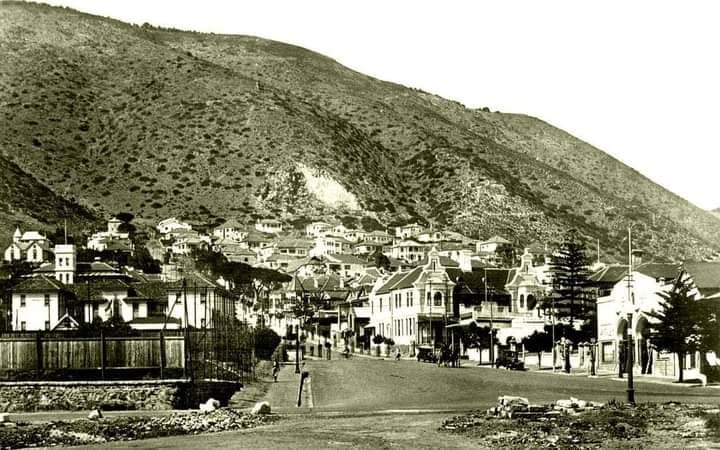
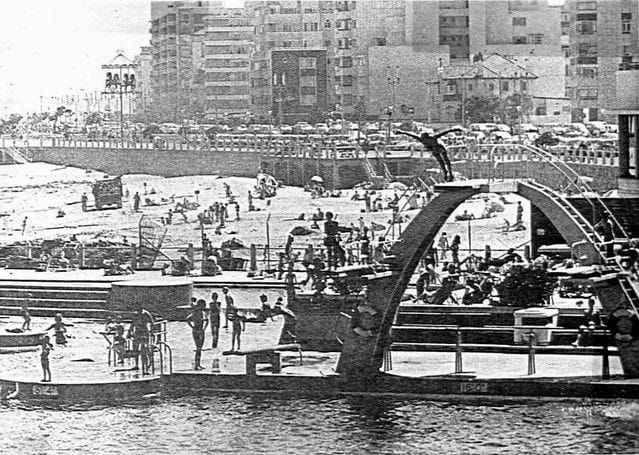
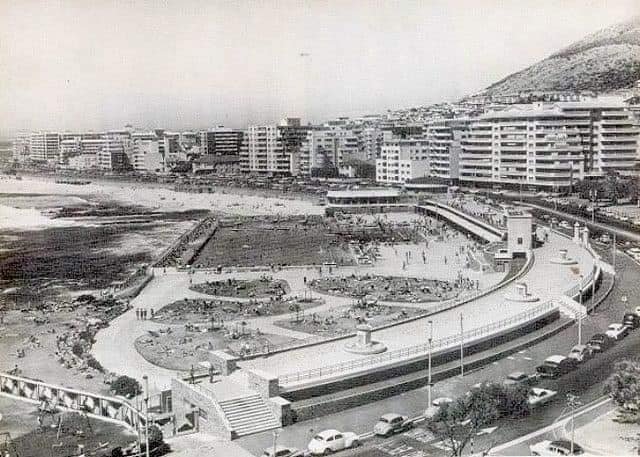
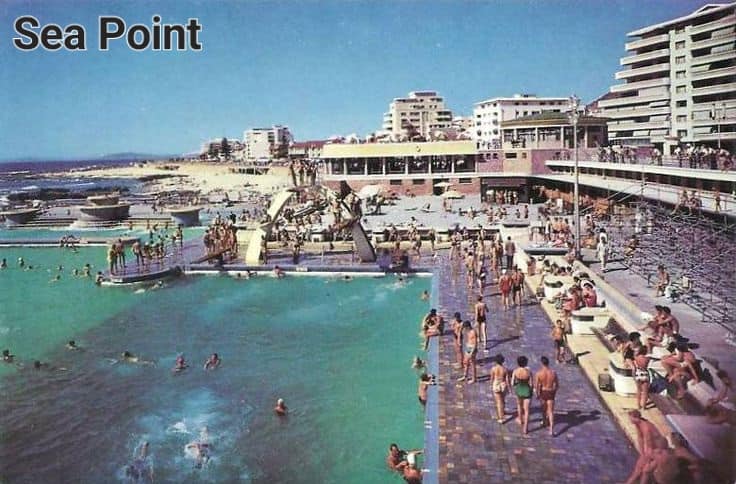
Vintage pictures of Sea Point
Charles Darwin’s Rocks
Next to the parking lot at the south end of Queens Beach, near the intersection of Beach and Alexander Roads, are some striking rocks that are considered a ‘geological wonder.’ They represent an impressive ‘contact’ from about 540 million years ago between granite and the sedimentary rock that forms Signal Hill. They were discovered by Clark Abel in 1818, and are named after Charles Darwin who visited them on his worldwide journey in 1836. He was intrigued by what he saw and decided to stay at the Cape of Good Hope, the second-longest of all his stops during his five-year voyage
The postcodes for Sea Point are 8005 (streets) and 8060 (boxes)
Things to see and do in Sea Point
- Pavilion Park is a tidy fenced-off play park for children right next to the Pavilion
- The five white horses on the grass of Sea Point’s promenade are a permanent art sculpture commissioned by the City of Cape Town.
- Sea Point promenade
- Sea Point Promenade outdoor gym.
- Festival of chariots
Resources
Practical information for the Western Cape, Regulations, permits and helpful tips. See the Colourdots coastal and nature use guide
- WEATHER IN SEAPOINT TODAY
- Browse businesses and places to visit in Sea Point

Useful Numbers
Residents and visitors can find important local contact numbers below, including police, medical services, utilities, and community facilities
-
Emergency Services
- Police: 021 430 3700
- Fire: 021 434 2020
- Ambulance: 10177
-
Medical
- Closest hospital: Sea Point Medical Centre- 021 439 4497
- Pharmacy; Sunset Pharmacy-021 434 3333
-
Municipal & Utilities
- Water: 0860 103 089
- Electricity: 0860 103 089
-
Transport & Roads
- Traffic Department: Gallows Hill Traffic Department-0860 103 089
- Road Emergencies / SANRAL: 0800 204 204
-
Community & Safety
- SPCA: 021 700 4140
- NSRI 087 094 9774
- 24 hour Poisons Information Helpline of the Western Cape: 0861 555 777.
-
Local Contacts and Community Resources
- Post office;021 434 2315
- Library:021 400 4184
- Ratepayers Association: 083 3888 226
- Sea Point Civic Centre: 021 400 3647
-
Schools in Sea Point
- Sea Point High School-021 434 9141
- Sea Point Montessori Pre-primary School-083 944 9772
- Herzlia Weizmann Primary School-021 286 3901
- French School Cape Town-021 434 1278
- Find a comprehensive list of Cape Town Emergency numbers HERE
- The City of Cape Town Public Emergency Communication Centre is available 24/7 For all life or property-threatening emergencies. Call 021 480 7700 from any phone or 107 from a landline or report online at https://bit.ly/3o4Ji3K
Other suburbs along the Atlantic seaboard include: Bantry Bay; Bakoven; Camps Bay; Clifton; Fresnaye; Greenpoint; Hout Bay; Llandudno; Mouille Point; and Three Anchor Bay
- Colourdots is an independent regional information resource for the Western Cape.
Learn more about the project HERE
