
Today it is difficult to imagine the Western Cape without railways. For more than 160 years, trains have carried people, livestock and goods across the province, helping to shape towns, grow industries and connect communities.
Before the railway, almost everything travelled by ox wagon. Journeys were slow, expensive and often dangerous. A trip from Cape Town to the interior could take several weeks, while transporting wine, wheat or wool to the harbour was a major undertaking.
Everything changed on 13 February 1862, when the first section of railway in the Cape Colony opened between Cape Town and Wellington. Although modest by today’s standards, it marked the beginning of a transport revolution that would eventually spread across South Africa.
The railway quickly proved its value. Farmers could send produce to market more efficiently, passengers travelled in greater comfort, and towns along the route began to flourish. As the lines expanded, places such as Bellville, Paarl, Worcester, Beaufort West and many smaller communities became linked by the growing rail network.
Before the Railway
For more than 200 years after Jan van Riebeeck established the refreshment station at the Cape in 1652, transport relied almost entirely on wagons pulled by oxen or horses.
Roads were rough tracks that became muddy in winter and dusty in summer. Crossing mountain passes could take days, and heavy wagons frequently became stuck in rivers or on soft ground; breakdowns were common.
Fresh produce often spoiled before reaching Cape Town, while imported goods took weeks to reach inland settlements. The need for a faster and more reliable form of transport became increasingly clear as the colony expanded.
The First Railway
The first railway line in the Cape was built to connect Cape Town with Wellington, passing through Salt River, Bellville, Kraaifontein, and Paarl.
The speed of the journeys was unprecedented. What had previously taken days could now be travelled in a few hours.
However, not everyone welcomed the new technology. Some feared trains would frighten livestock, while others believed travelling on a Sunday was inappropriate. One Paarl minister even condemned the railway from the pulpit before, of course, later becoming a passenger himself.
Building a Network
The success of the first railway encouraged rapid expansion. The line was extended to Worcester, opening the fertile Breede River Valley to faster transport. Reaching Worcester was relatively straightforward compared with a bigger challenge: the Hex River Mountains!
Engineers faced steep gradients, deep ravines and solid rock. The solution required tunnels, cutting and impressive stone bridges, making the Hex River section one of the greatest engineering achievements of nineteenth-century South Africa.
Beyond the mountains, the railway crossed the t Karoo before eventually reaching Kimberley, where the discovery of diamonds created a huge demand for reliable transport.
The Cape Gauge
The earliest railway was built to the standard gauge used in Britain. Engineers soon realised that South Africa’s rugged terrain made construction both difficult and expensive. In 1873, the Cape Government Railways adopted a narrower gauge of 1,067 millimetres, which became known worldwide as the Cape Gauge. The narrower track reduced construction costs while allowing trains to negotiate tighter curves through mountain passes. Today, Cape Gauge remains the standard railway gauge across much of southern Africa.
Railways and Western Cape Towns
The arrival of the railway transformed many Western Cape communities.
- Bellville developed around D’Urban Road Station before becoming an important railway junction.
- Kraaifontein grew from a small stopping place into a busy transport hub.
- Worcester became the gateway to the interior, while Beaufort West developed into one of the country’s most important railway centres.
- Many other towns, including those already featured on Colourdots, owe much of their early growth to the arrival of the railway.
Interesting local Railway Facts
- The first Cape railway carried both passengers and freight.
- Steam locomotives needed regular water stops, helping some small settlements develop into towns.
- The Cape Gauge was adopted across much of southern and central Africa.
- Early railway workers blasted tunnels by hand using black powder.
- Before refrigeration, trains played a vital role in transporting fruit, wine and agricultural produce to Cape Town harbour.
- Some of the oldest station buildings in the Western Cape are still in use today.
A Short Timeline
1859 – Construction of the Cape’s first railway begins.
1862 – The first section of railway opens between Cape Town and Wellington.
1873 – The Cape adopts the 1,067 mm Cape Gauge.
1876 – The railway reaches Worcester.
1885 – The line reaches Kimberley.
1886 – Gold is discovered on the Witwatersrand, increasing demand for rail transport.
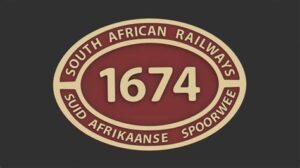
1910 – South African Railways is established following the Union of South Africa.
Although modern transport has reduced the importance of passenger rail in many areas, the railway remains one of the greatest engineering achievements in the history of the Western Cape. Railways connected isolated communities, opened new markets for farmers, encouraged tourism and helped many towns grow into the centres we know today.
Explore Colourdots, and you’ll discover that the railway played an important role in the history of many Western Cape towns. Look out for railway stations, bridges, museums and preserved locomotives that continue to tell the story of the Iron Road
The Blue Train and luxury rail travel
The Blue Train is South Africa’s most famous luxury train and one of the world’s great rail journeys. Its origins date back to the Union Limited and Union Express, which carried passengers between Cape Town and the diamond fields during the 1920s. Introduced in its distinctive blue livery in 1946, the Blue Train has become an icon of luxury rail travel, offering elegant suites, fine dining and exceptional service while travelling through some of Southern Africa’s most spectacular landscapes. Over the decades, it has welcomed royalty, presidents and celebrities.
The Stellenbosch Toy Museum features a detailed and lifelike miniature of South Africa‘s famous Blue Train

Living Legends of the Garden Route: Patricia & Sylvia
- Patricia (Class 6A No. 473) was built in 1897 in Scotland by Dübs Locomotive Works just before the Anglo-Boer War. She was shipped to South Africa that year and was actively used on the front lines, serving significantly during the historic Siege of Mafeking. She survived the war, spent decades working for South African Railways, and was eventually sold to the mining sector in the 1950s. After being left to rust following a museum collapse, she was saved by a dedicated collector and underwent a meticulous 7-year restoration at the historic Germiston Workshops. She is now based at the local Voorbaai steam depot.
- Sylvia (Class 19B No. 1412): Built in 1930, this 96-year-old marvel of engineering was brought back to life by the local Ekström brothers. Sylvia regularly commands the scenic coastal tracks, giving passengers a nostalgic journey from a bygone era along the ocean’s edge
Railway Heritage across the Western Cape
The railway may no longer dominate transport in the Western Cape the way it used to, but reminders of more than 160 years of railway history are scattered across the province
Its history can still be seen. Historic stations, locomotives, bridges, tunnels, museums and railway journeys that remind us of the province’s long association with the Iron Road.
One of the oldest surviving locomotives can be found at Choo Choo Park in Claremont. Brooks locomotive No. 2725 was built in 1896 and originally worked for the Transvaal & Delagoa Bay Collieries. It was later used during the construction of the Simon’s Town Naval Yard. In Ashton, a Class 14 CR locomotive stands beside the municipal offices. Built in 1919, it worked on the Mossel Bay–Worcester railway section.
Historic railway stations worth visiting. Include Cape Town Station, which dates back to the earliest train journeys, while the present Muizenberg Station, opened in 1913, replaced the original simple structure of 1882. The building is a proclaimed national monument and is notable for its Edwardian architecture and teak clock tower.
and Shuntin Shed is a quirky diner at the old Bot River railway station.
The impact of the railways can also be seen in tunnels and bridges. The Hex River Tunnels carry the railway trains through the mountains, while the historic Gouritz River and Kaaimans River Bridges demonstrate the engineering challenges faced by the early railway builders. Sadly, the Kaaimans bridge is no longer operational due to severe flood damage. Further north, the enormous Sishen-Saldanha Railway Bridge crosses the Olifants River. Completed in 1975, it is 1,035 metres long, and on this route, South Africa set the world record for the longest and heaviest train ever.
Railway heritage is not limited to full-sized trains. Western Province Live Steamers preserves railway history through miniature locomotives and gives visitors the opportunity to ride on a miniature steam train. Children can also ride The Redberry Express at Redberry Farm in George, Blue Train Park in Mouille Point, or the Winelands Light Railway in Stellenbosch.
For a nostalgic steam train journey, Southern Cape Railway operates in the Greater Mossel Bay area, while New Cape Central Railways runs journeys through the Breede River Valley. Atlantic Rail works to preserve South African railway heritage through the restoration of locomotives and coaches in the Robertson/ Worcester area, and the Outeniqua Power Van offers a railway journey through the scenery of the Garden Route.
Railway history can also be explored at the Outeniqua Transport Museum, which has a collection of locomotives and other transport memorabilia. At the Matjiesfontein Transport Museum, visitors can climb aboard a historic steam train and its carriages.
The railway has even found a place in unusual accommodation. The Santos Express in Mossel Bay uses genuine railway carriages as accommodation on Santos Beach, while the Red Caboose in Greyton offers accommodation in a beautifully restored railway carriage.
Railways remain part of everyday transport too. Metro Rail operates commuter services around Cape Town, while the Flying Dutchman Funicular at Cape Point carries visitors between the lower and upper stations.
Citations
https://www.theheritageportal.co.za › article › roaming-western-cape-rails
https://sites.google.com/site/soulorailway/soul-of-a-railway/system-1-cape-western/part-1-cape-town-prior-to-wwii
https://en.wikipedia.org/wiki/Rail_transport_in_South_Africa