
Check the mountain, not the App
Cape Town has a reputation for unreliable weather. One moment, the next, a chilly wind sweeps in from the Atlantic. Locals describe it as“four seasons in one day”.
Why is Cape Town weather so changeable?
Cape Town’s weather is confusing. One hour, it’s bright and windless. Next, the wind pumps. This is caused by the geography of the peninsula that lies between two bodies of water. The icy Benguela Current drifts up from Antarctica on the Atlantic side, while False Bay is somewhat affected by the Agulhas Current and is a bit warmer.
A gentle sea breeze can turn into a gale in minutes. Rain can suddenly appear, and then the weather will clear in a flash.
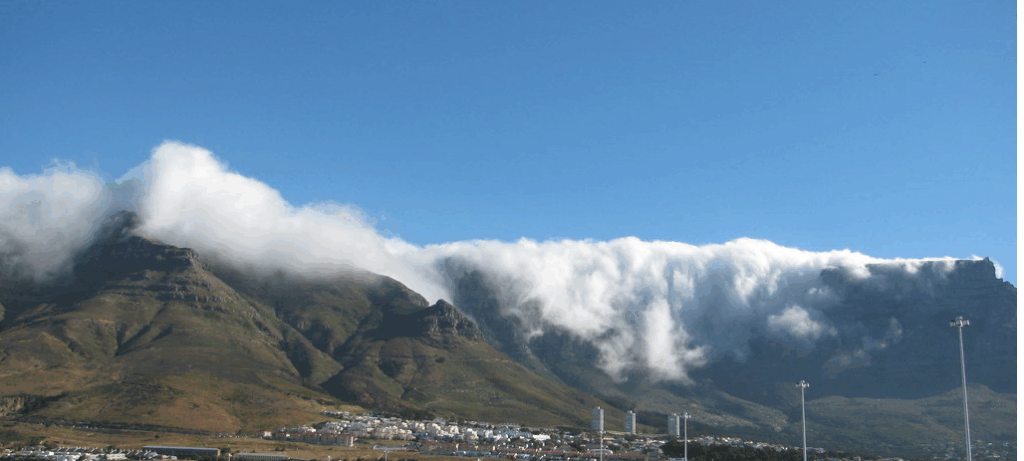
Table Mountain is the weather-maker. The flat-topped mountain creates its own climate. Moist air from the ocean rises, cools, and condenses against the cliffs, forming the iconic “tablecloth” of cloud.
In the city, it may feel cool and misty. Then drive a few km to the Atlantic coast, and you’ll find sunshine and blue skies. These Cape Town microclimates are why the weather app is so often wrong‘
The Cape Doctor
This is a strong south-easterly wind that sweeps across the peninsula, usually during the summer months. It can ruin your beach day, but it also clears pollution and keeps the skies blue.
When the south easter blows, it rains in Gauteng. It is all connected.
There’s a local saying that is not even hyperbole; it perfectly describes Cape Town weather: “four seasons in one day.”
. Morning sun, afternoon wind, and chilly evenings, maybe even a spot of rain, all before sunset and then you may need a jacket, or not? You never know
However, the crisp, clean air and clear, luminous light of the long summer afternoons make for great sunsets and stunning pictures.
So what makes it so windy?
Cape Town has always been known to be a windy city, and late spring into early summer is the south-easter season. Wind is caused by an imbalance in air pressure. Air moves from an area of high pressure, where the air is moving downward, to an area of low pressure, where the air is rising
The Western Cape is on the eastern flank of the South Atlantic high-pressure system, where air rotates anticlockwise. The greater the difference in pressure between these high-pressure areas and the land, the stronger the wind will be.
. Cape Town’s windiest months are November through February, with January usually the windiest of all. May to June are the calmest months.
Locals adapt to the weather. The saying goes, “There is no problem with the weather, just with your wardrobe”. You will need sandals, scarves, sunglasses and an umbrella, often all at once. It is wise to be flexible and spontaneous. There are loads of choices. If hiking or going up the mountain is out of the question, the winelands are a good option, always ready to shift from hiking to wine tasting if the clouds roll in. Go to the beach early. The wind generally picks up towards midday
Link to Windguru: Check expected wind direction and speed
When to visit Cape Town
It is best to work with the rhythm of the Cape Town weather. Each time of year shows a different side to the city, from golden beach days to misty mountain mornings. There’s not really a best time to visit. It depends on what you love to do, whether you like long, sunny beach days, misty forest walks or cosy fireside wine-filled afternoons.
Summer in Cape Town (November-February)
Daytime temperatures are usually between 25 and 30 degrees Celsius, though the Cape Doctor wind often keeps things cooler. The Atlantic Ocean is cold, making swimming refreshing, brisk and brief.
Enjoy sunsets on the Atlantic seaboard, open-air concerts and city nights. Always carry a light jacket the air can get quite cold when the sun goes down.
Autumn in Cape Town (March-May)
Autumn in Cape Town makes for some of the best days. The wind calms, the air softens, and the crowds thin out. Temperatures are usually between 18 and 25 degrees. The vineyards turn yellow and orange and are quite spectacular.

Winter in Cape Town (June-August)
The cooler Winter days are between 12 and 18 degrees C Sometimes there are soft, gentle showers, sometimes driving rain and sometimes clear, crisp sunny days with no wind. Winter is the season for fireplaces and red wine. The whales visit the coast in the winter months.
Sometimes Cape Town will experience a Berg Wind. This is a northerly wind from the interior that is gentle and warm. The weather can get quite hot. These days are beautiful and great for a beach visit, but within the next day or two, heavy rain is guaranteed.

Spring in Cape Town (September-October)
Temperatures rise to 20 degrees C. This is the time the Western Cape flower carpet blooms. The show depends on the amount of rain that fell during the winter. The weather is pleasant, and a good time for adventuring before the crowds arrive.

- For long sunny days, summer is best.
- For quiet days and golden light, choose autumn.
- For cosy evenings and wild weather, winter is the time. It is not called the Cape of Storms for nothing.
- Spring is when the Western Cape puts on the spectacular flower display.
What to Pack for Cape Town Weather
Packing for Cape Town weather is an art; be positive but prepared. Locals have learned to prepare for the “four seasons in one day. Begin with comfortable basics, add a warm layer, and finish with something windproof /waterproof. The mornings can feel cool, the afternoons warm, and the evenings cool again.
It is wise to always carry a light jacket even in summer. In winter, a soft jumper and a rainproof jacket will see you through. It does not get very cold in Cape Town.
Cape Town packing list:
- Lightweight cotton basics
- A ight, waterproof jacket/windbreaker.
- walking shoes.
- A warm jumper for cooler evenings,
- A sun hat,
- Swimming costume in summer
- Waterproof shoes in winter.
Cape Town Travel Tips for Every Possibility.
- If Table Mountain is covered in clouds, it may get very windy. Clouds around Lion’s Head and nowhere else means rain within 12 hours. Clear skies above the mountain? You’re in for a clear but perhaps windy day.
- Capetonians will check the mountain before looking at the weather app.
- Plan a flexible itinerary. Sunny one place could mean misty on the mountain.
Interactive map of the Cape Peninsula
Cape Town Microclimates.
- On the Atlantic side of the peninsula, the air can be cool and misty, while False Bay is sunny. Choose your side!
- If the wind is blowing in Camps Bay, they head to the False Bay coast.
- If it is cloudy in town, the Southern suburbs will be nicer, or go north towards Blouberg.
- The West Coast is often sunny when it is raining in the Southern suburbs.
- The confusing unpredictability of Cape Town’s weather keeps locals and visitors on their toes.
- Stay flexible and enjoy different activities in different weather.
CT Weather Office: 021 934 0749 / 0831 Weatherline: 083 123 0500
Here is a link to the weather app anyway
See also Tips for travellers to the Western Cape
- Colourdots is an independent regional information resource for the Western Cape.
Learn more about the project HERE
