
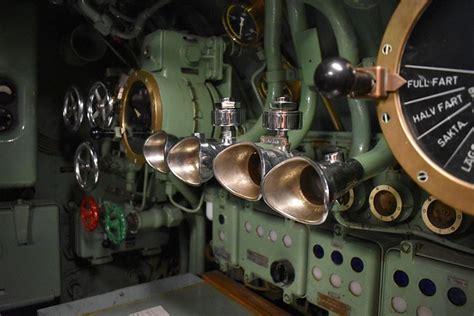
Mouthpiece U-Boat Control Unit
Wartime shipping around the Western Cape
The U-boat attacks were just a part of the wartime story along the Western Cape coast. Merchant ships, troopships and cargo vessels continued to use these dangerous sea routes throughout the Second World War. Mines and submarines claimed many vessels from Cape Town and Cape Point to Cape Agulhas and beyond,
Shipwrecks around the Western Cape coast
During the Second World War, the waters around the Western Cape became part of the wider Battle of the Atlantic. South Africa’s strategic position on the sea route between Europe and the East made the Cape an important conduit for supply and shipping. In 1942, German U-boats entered South African waters as part of Operation Eisbär, with orders to attack Allied shipping. The attacks began on 7 October, two days earlier than planned, and within days the coast had become the scene of a devastating series of attacks.
The U-boats arrive at the Cape
In October 1942, German U-boats approached the Cape expecting to find Table Bay crowded with ships. Instead, they found an unexpectedly empty harbour. Searchlights and land-based radar made surface attacks too dangerous. Given freedom to operate, the U-boats moved offshore and began attacking merchant shipping.
U-172, commanded by Carl Emmermann, sank Chickasaw City, Firethorn, Pantelis and Orcades. U-159, under Helmut Witte, sank Boringia, Coloradan, Empire Nomad, Ross and Laplace. U-68, commanded by Karl-Friedrich Merten, sank Koumoundouros, Gaastekerk, Swiftsure, Sarthe and Examelia. U-179, commanded by Ernst Sobe, sank City of Athens before being detected and sunk by HMS Active with depth charges, with the loss of all hands.
Within roughly 48 hours, the attacks had caused enormous losses along the Cape coast. Shipping was diverted or halted altogether, but the U-boats continued operating farther south and east. Other vessels were attacked in the waters beyond the Cape, including Empire Chaucer, Anne Hutchinson, City of Johannesburg, Duchess of Atholl and Mendoza.
The attacks demonstrated how vulnerable shipping was along South Africa’s long coastline and how important the Cape’s radar stations, coastal observation posts and anti-submarine defences were.
Observation posts and lookout points were established along the coast, some of which can still be seen today. Hangklip was an important lookout. Remains of wartime observation facilities can also be found at Cape Point and Yzerfontein. The Langebaanweg military aerodrome was established in 1942, originally as Air Force Station Congella, a training unit to counter the German and Japanese submarine threat. Darling also played a role in protecting shipping around the Cape. Between 1942 and 1943, the South African Air Force expanded the local airfield to help protect naval convoys approaching Cape Town. No. 23 Squadron was stationed there, flying Lockheed Ventura aircraft on patrols over the sea routes around the Cape, while a detachment from No. 27 Squadron joined them later. The airfield was also used by No. 29 Operational Training Unit for torpedo training.
7 October 1942
Chickasaw City, an American steam-powered merchant ship, was the first victim of the U-boat attacks off the South African coast. About 130 km southwest of Cape Town, it was struck by two torpedoes from U-172. Ten people died, while 37 escaped in lifeboats, rafts and floats. A day and a half later, HMS Rockrose picked up the survivors and landed them in Cape Town.
Boringia, a Danish motor-powered merchant ship, was struck by a single torpedo fired by U-159. Twenty-five people were killed. The survivors were picked up a few hours later by the Clan Mactavish. The ship was carrying rubber bales from Southeast Asia, and it has been suggested that bales that have washed up along the southern coastline of South Africa over many decades came from the wreck.
Clan Mactavish, a British steam-powered merchant ship, was then attacked by U-159 two hours after picking up the survivors of the Boringia, about 160km west-southwest of Cape Town. The first torpedo missed, but the second struck, and the ship began sinking within two minutes. No lifeboats could be launched, and survivors clung to wreckage and rafts. Fifty-four lives were lost. The U-boat surfaced to question the survivors, but an aircraft nearby forced it to dive. The Matheran, which was nearby, rescued the 67 survivors and landed them in Cape Town the following day.
Pantellis, a Greek steam-powered merchant ship, was struck by U-172 on 7 October about 60km southwest of Cape Town, just off Slangkop Point. The boiler exploded, and the ship sank in less than two minutes, leaving no time to launch the lifeboats. Twenty-eight people died. Five survivors managed to cling to a raft and were later picked up by HMS Rockrose and landed in Cape Town.
8 October 1942
Koumoundouros, a Greek steam-powered merchant ship, was attacked by U-68 southwest of Cape Point on 8 October. Two torpedoes missed before one struck the starboard side about 36km from Cape Point. Twenty-six survivors escaped in boats, but five people below deck went down with the ship when another torpedo struck. HMS Nizam and HMS Foxhound rescued the survivors and landed them in Cape Town the following day.
Gaasterkerk, a Dutch steam-powered merchant ship, was attacked by U-68 about 24km from Cape Point. The second torpedo missed, and a distress signal was sent. All 64 people on board reached the lifeboats. The final torpedo struck, detonating and blowing apart the stern section. HMS Nizam rescued the survivors and landed them in Cape Town the following day.
Swiftsure, an American steam-powered tanker, was torpedoed by U-68 about 40km southeast of Cape Point. A fire broke out and, despite fighting it for half an hour, the 32 people on board abandoned ship in three lifeboats. They were picked up three hours later by a British minesweeper.
Sarthe, a British steam-powered merchant ship, witnessed the attack on the Swiftsure and attempted to evade the U-boat by heading towards the coast. About 55km south-southwest of Cape Point, it was hit by U-68. The 57 people on board abandoned ship, and a final torpedo broke the vessel’s back. HMSAS Vereeniging rescued the survivors, who landed in Simonstown the following day.
City of Athens, a British steam-powered merchant ship, was attacked by U-179 about 80km northwest of Dassen Island. A torpedo ripped a large hole in hold number four. Distress signals were sent, and the U-boat was spotted, but it dived before the ship’s guns could fire. Six lifeboats carried 99 of the 100 people on board. The missing fireman was the only person initially unaccounted for. When the U-boat’s periscope was spotted again, another distress signal was sent, followed by a final torpedo. The ship sank within ten minutes. The survivors collected floating stores and a cat before making for Cape Town, and HMS Active eventually rescued them.
On 8 October, HMS Active also opened fire when U-179 surfaced. The submarine immediately dived and depth charges were dropped. A large oil slick appeared, and U-179 was never heard from again.
9 October 1942
Examelia, an American steam-powered merchant ship, was spotted and pursued by U-68 south of Cape Point on 9 October. A torpedo struck the engine room, and the ship sank within seven minutes. Fifty-one people launched two lifeboats, four rafts and two floats, but eleven lives were lost.
Belgian Fighter, a steam-powered merchant ship, was struck by a torpedo fired by U-68 southeast of Cape Town. The explosion killed five people and injured two others. Lifeboats were launched, but no distress signal could be sent because the aerials had been destroyed. A later torpedo sank the vessel.
Coloradan, an American steam-powered merchant ship, was torpedoed by U-159 southwest of Cape Town on 9 October. The ship sank in eight minutes. Of the 55 people on board, 49 escaped in two lifeboats, while six died.
10 October 1942
Orcades, a British troop transport ship, was torpedoed and sunk by U-172 on 10 October. It was carrying 290 crew members, 36 gunners and 741 passengers who were returning to the United Kingdom. The ship was travelling slowly to conserve fuel, and rain had reduced visibility. Torpedoes struck the port side, destroying the port engine and steering gear. A distress signal was sent, and 20 lifeboats were launched, although heavy seas made the evacuation difficult. Three further torpedoes struck the starboard side, and the ship sank within six minutes.
13 October 1942
Empire Nomad, a British steam-powered merchant ship, was torpedoed and sunk by U-159 south of Cape Point on 13 October. A torpedo struck near the boiler room, bringing the ship to a complete halt. Two further torpedoes missed, but a fourth struck the starboard side. Fifty-three people abandoned ship while some crew members remained behind to send distress signals. A fifth torpedo struck and the vessel sank with those men still on board.

30 October 1942
U-159 attacked two vessels about 600km south of Mossel Bay on 30 October.
Ross, a British motor-powered freighter, was struck by a torpedo that blew off the hatch covers, set the number two hold on fire and broke the ship’s back. The 40 people on board abandoned ship, but a second torpedo struck, and the vessel sank in less than a minute.
Laplace, a British steam-powered merchant ship, was attacked shortly afterwards. After the first torpedo struck, the engines were stopped, and distress signals were sent while the lifeboats were prepared. A second torpedo narrowly missed, but a third struck and the vessel sank in less than three minutes.
2 November 1942
Aegeus, a Greek steam-powered merchant vessel, was attacked by U-177 on 2 November about 150km west of Elands Bay. The first two torpedoes missed, but another struck the vessel, which exploded. All 29 people on board were killed.
3 November 1942
East Indian, an American motor-driven merchant ship, was attacked by U-181 about 500km southwest of Cape Point on 3 November. Two torpedoes struck, and the ship sank in less than two minutes. The master and 22 others went down with the ship, while 62 men escaped in a lifeboat and four rafts. Those in the lifeboat were rescued by the Durando almost two weeks later, about 100km south of Cape Point. The men on the four rafts were never seen again. The total loss of life was 68.
Other 1942 losses
Thomas T Tucker, a Houston-built munitions carrier, ran ashore at Oliphantsbos near Cape Point on 27 November. On the same day, Jeremiah Wadsworth, an American Liberty ship, was torpedoed and sunk by U-178 about 400km south of Cape Agulhas
Alcyone was a Dutch steam-powered merchant ship that sank after striking two mines laid by the German minelayer Doggerbank, 40km west of Cape Town.
Soudan was a British steam-powered cargo ship that sank on 15 May after striking a mine probably also laid by the Doggerbank, off Cape Agulhas. One life was lost.
Argo, a motor-powered coaster, was torpedoed by the Italian submarine Ammiraglio Cagni on 29 November, about 75km south of Cape Point. Eighteen of the 36 people on board died and 18 survived.
1943
The /Sabor was a British cargo boat that was torpedoed on 9 March. Six crewmen were killed, and the survivors were brought to Mossel Bay. Aelybryn was a steam-powered ship that was the last vessel claimed by the infamous U-160. Late at night on March 11, unescorted, it was struck by two torpedoes. 9 lives were lost; survivors were picked up by The Lourenço Marques.
1944
UIT-22, on March 11, this Italian submarine, which the Germans took over after the Italians surrendered, was sunk after three RAF Catalinas went hunting for three known U-boats south of Cape Point. All 46 on board were killed. Dahomian was a British steam-powered merchant ship that was torpedoed and sunk by U-852 near Kommetjie on April 1. The ship was en route from New York to Cape Town with a general cargo including mail and 17 aircraft. Two crew members died; the survivors were picked up by the HMSAS Krugersdorp and HMSAS Natalia, who took them to Simon’s Town. Columbine, a South African steam-powered merchant ship, was torpedoed and sunk at night by the German submarine U-198 on June 16, 40 km off the Vredenburg Peninsula. Of the 52 people on board, 29 survived. It sank so suddenly that no distress call was sent out and its fate was only discovered some days later when a lifeboat was discovered