
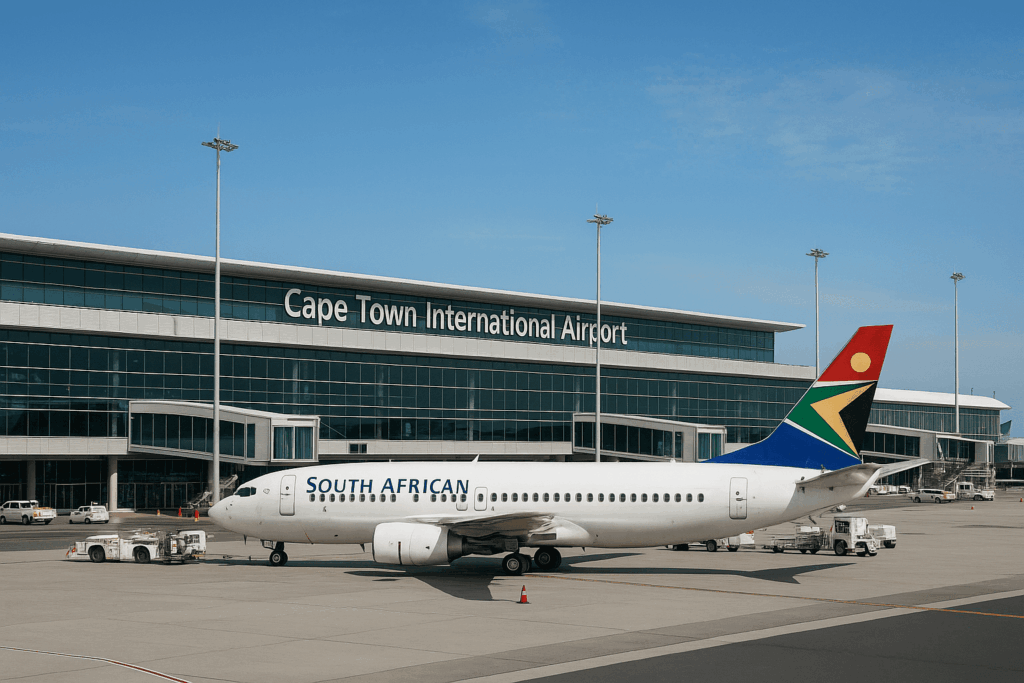
Cape Town International Airport (CPT) is the main gateway to the Western Cape, handling domestic and international flights to over 30 destinations worldwide. The airport features modern terminals, a wide range of passenger facilities, and convenient transport links to Cape Town city centre and surrounding areas.
Location & Contact Details –
The airport is located approximately 20 kilometres from the Cape Town CBD Map
Physical Address: Cape Town International Airport, Matroosfontein, Cape Town, 7490, South Africa
Information Desk: 021 937 1200 Email: customercare@airports.co.za Website:
Transport
Several transport options are available for travellers.
- Major car rental companies operate from the Transport Plaza in front of the Central Terminal Building, offering a wide range of vehicles. See renting a car in the Western Cape
- Airport Taxis: Passengers are advised to use authorised airport taxi services. These operate from transport kiosks and the domestic arrivals desk in the Central Terminal Building.
- E-Hailing Services: Services such as Uber and Bolt use a designated pick-up point on the ground floor of Parkade 1.
- Bus Service: The MyCiTi Bus Service operates a route between the airport and the Cape Town city centre. (route info).
History of cape Town International airport
Cape Town’s main airport opened in 1954, replacing the earlier airfield at Wingfield Aerodrome. The new airport was originally known as Bellville Airport, named for the nearby town, before being renamed D. F. Malan Airport after South African Prime Minister D. F. Malan.
Wingfield had played an important role in early aviation in the Cape. During the Second World War, the airfield was used by the Royal Navy’s Fleet Air Arm and the South African Air Force for maritime patrols and training. After the war, it became Cape Town’s first municipal airport, but as aviation expanded, the site proved too small for further development. 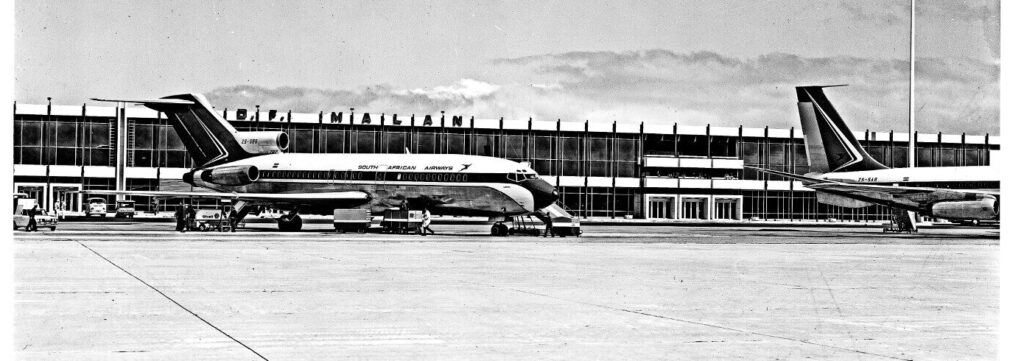
The new airport, built on farmland east of the city, opened with longer runways and more space for modern aircraft. The South African Air Force also used the facilities, moving some operations from Ysterplaat Air Force Base because its runways were too short for larger aircraft.
International flights began in the mid-1970s, including services from South America and later direct flights to London. The airport was upgraded several times, with longer runways and improved lighting systems to accommodate larger aircraft such as the Boeing 747. In 1973, the supersonic Concorde even visited Cape Town during testing flights.
In the early 1990s, ownership of the airport transferred to Airports Company South Africa, and it was renamed Cape Town International Airport, reflecting South Africa’s political changes and its growing role as one of the country’s main international gateways.
Medical and Assistance Services
- First Aid Station: Located in the Southern Office Block. Tel: +27 (0)21 936 2277
- Medical Clinic and Pharmacy: Available on site for health needs or emergencies.
- Passenger Assistance: Airlines and airport staff assist passengers with reduced mobility. This service should be arranged with your airline at least 48 hours before departure.
Passenger Amenities
- Prayer Rooms: Multi-faith prayer rooms are available for quiet reflection
- Baby Changing Facilities: Located in most restroom facilities throughout the terminal.
- Disabled access: The airport is designed to be accessible to all passengers, including those with disabilities. Facilities include elevators, moving walkways, and ramps with gentle slopes.
Baggage Services.
- Luggage Wrapping: Available in the departures hall to protect baggage.
- Lost and Found: For items lost in the terminal, contact the main information desk. For missing luggage, contact your airline directly
Baggage storage at the Airport
- Domestic Arrivals: (021 936 2884 — approximately R15 per suitcase per day, regardless of size.
- International Departures: baggage storage with Moda Exotica (021 936 2494 )— approximately R20 per suitcase per day
- See other options for baggage storage in Cape Town
Other Services
- Airport tours: (021 937 1275)
- Post Office: near domestic arrivals
- Airport Lounges: Premier Lounge (single or multi-visit passes), plus airline lounges (SAA, British Airways)
- Free WiFi “#CPT Free WiFi”
- ATMs & foreign exchange throughout arrivals and departures
- Restaurants
- Retail shops
-
Airport porters operate independently. Group porter bookings: 083 710 6893
Business Facilities
Business travellers at Cape Town International Airport have access to conference and lounge facilities within the terminal.
The Premier Conference Centre, located near the Domestic Arrivals terminal (tel: 021 936 1118), has meeting facilities for small events and business gatherings. It includes two larger conference rooms for 40–70 people and two smaller meeting rooms for 6–10 people.
The Premier Lounge is a comfortable space open to all passengers. Access can be purchased as a once-off visit or through a multi-visit card. Some airlines also operate their own lounges at the airport, offering additional facilities for eligible passengers
Accommodation nearby
There are two hotels located within the airport precinct: Hotel Verde, a four-star hotel owned by Bon Hotels (021380 5500), and Road Lodge, a budget hotel owned by the City Lodge. (021 934 7303), Other hotels near the airport are Garden Court Eastern Boulevard Hotel (021 448 4123) and Courtyard Suite Hotel (0214 483 929)
Airport Safety
- Secure your luggage: Lock suitcases and attach clear name tags. Plastic luggage wrapping is available at most international airports.
- Keep documents safe: Carry certified copies of your passport, flight tickets, accommodation bookings, and car rental documents in your hand luggage.
- Do not separate from your bags: Keep luggage with you at all times and do not allow strangers to handle or tamper with it.
- Carry valuables in hand luggage: Jewellery, electronics, and other valuable items should stay with you.
- Watch personal belongings: Do not leave cell phones, wallets, or valuables on restaurant tables. Avoid placing handbags or shopping bags under tables or on the backs of chairs.
- Keep bags together: Place parcels and bags in one visible spot so they are easy to monitor.
- Never leave drinks or bags unattended.
