
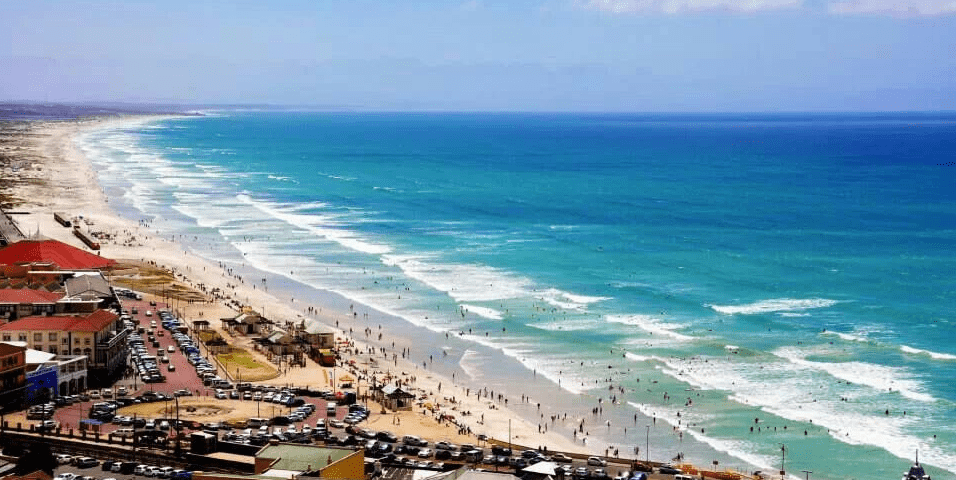
Updated February 2026 140 Beaches in the Western Cape
Find a list of Western Cape beaches here
South Africa has some of the world’s most beautiful, unspoiled beaches. There are long stretches of white sand that go on for miles. Beaches in the Western Cape offer great surfing, fishing and other water sports opportunities. South Africa was the first country outside Europe to use the Blue Flag international beach grading system.
Blue flag beaches
To achieve blue flag status, a beach must fulfil several safety, cleanliness, and amenities requirements. Not all South African beaches are blue-flag beaches. This is merely a guide to assess the services and safety of Beaches. Blue flag status depends on the following criteria:
- High standard of life-saving services
- Sufficient ablutions
- Disabled access
- Information boards about the ecosystem
- Environmental management
- Facilities such as parking, access points
- Cleanliness
- Water safety
Beaches in Cape Town
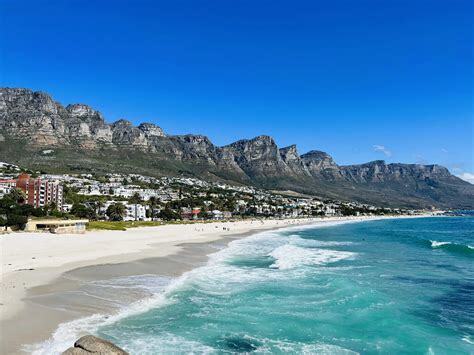
The water on the False Bay side of the Cape Peninsula tends to be about 4 degrees warmer than on the Atlantic seaboard. The water around the Western Cape coastline, however, is generally quite cold. False Bay stretches in a crescent shape from Cape Point on the west to the Helderberg beaches on the east. The beaches on the Atlantic side are somewhat protected from southeast winds and face spectacular sunsets.
Whether looking for a family-friendly beach, a surfing hotspot, or a peaceful retreat to enjoy breathtaking views, the Western Cape’s diverse coastline has something for everyone. The combination of natural beauty, diverse ecosystems, and well-maintained facilities makes these beaches a top destination for locals and tourists.
Western Cape beaches with Blue Flag Status
Bikini Beach in Gordon’s Bay; Brenton on Sea; Buffels Baai; Camps Bay; Castle Beach in St Helena Bay; Clifton; De Bakke in Mossel Bay; Glentana Beach; Gouritsmond; Hartenbos; Hawston; Klein River estuary near Hermanus; Kleinmond beach; Lappiesbaai near Stilbaai; Llandudno; Lookout Beach in Plettenberg Bay; Melkbosstrand; Mnandi Beach in Mitchells Plain; Mossel Bay; Muizenberg; Natures Valley; Preekstoel beach near Stilbaai; Robberg Beach in Plettenberg Bay; Santos Beach in Mossel Bay Silverstroomstrand in Melkbosstrand; Struis Baai main beach; Wilderness; Witsand
Beware of rip currents. How do rip currents happen?
It is advisable to swim in areas where lifeguards are on duty. Many beaches around the Western Cape coastline have dangerous rip currents. These are powerful channels of fast-moving water flowing away from the shore. The currents usually form where waves break over sandbars or reefs, creating localised eddies. These can pull swimmers out to sea. The speed of the water movement can reach a speed of 3 metres per second.
Areas of darker water can indicate rip currents because of deep channels. Gaps between the waves and areas where waves are not breaking may be a sign of dangerous conditions. Choppy water on the surface can indicate a current where turbulent water is surrounded by smoother water.
If you are caught in a current, do not panic; it is best to conserve your energy by floating on your back. Do not fight against the current by attempting to swim towards the land; rather, swim sideways to escape the force of water. Signal for help by raising your arm and shouting for help.
If you see someone who appears to need help, call a lifeguard. 112 is a free call from your cell phone for any emergencies. The number for the NSRI emergency operations centre is 087 094 9774
Rules for dog walking on Western Cape Beaches
- Dogs must remain under the full control of their owner or dog walker at all times.
- All dogs must be kept on a leash at all times.
- Handlers must ensure their dogs do not disrupt or interfere with other beach users.
- Aggressive or dangerous dogs must be muzzled.
- Always yield to people who are not accompanied by dogs.
- Handlers are responsible for cleaning up after their dogs in all public areas, including beaches, grass, footpaths, and car parks. Waste must be removed immediately and disposed of in appropriate bins or taken off-site.
- Female dogs in heat are not permitted in public beach areas.
- Dogs must not chase, harass, or harm wildlife.
- All posted signage and beach regulations must be followed.
Nude and topless beaches in Cape Town
Cape Town is home to some beautiful nude and topless beaches. For naturists or people just wanting an all-over tan, Cape Town’s nude beaches offer a unique opportunity to embrace the sun, sea, and sand, while enjoying a sense of freedom. While Sandy Bay is the best-known nudist beach, Clifton 3rd Beach, Llandudno, tolerates topless bathing.
Many of the beach listings in Colourdots have links to sea temperature, tides and the surf report where relevant.
See a list of some of the Best beaches in the Western Cape
Tides for Western Cape beaches
What are spring tides and neap tides?
It is best to be aware of whether the sea is at high or low tide before you plan your beach visit. Spring tides are especially strong tides. These happen when the Earth, the Sun, and the Moon are in a straight line. The gravitational forces of the Moon and the Sun together contribute to a particularly high or low tide. Spring tides occur at full moon and new moon. Neap tides are weak tides that occur when the gravity of the Moon and the Sun are at a right angle to one another (with respect to the Earth). Neap tides happen at quarter moon.
Check the tide times for Western Cape beaches here
Beaches and Wildlife
Larger, open beaches are generally less attractive to wildlife than sheltered bays. Birds favour bays and rocky inlets, where food is easier to find, and danger is easier to spot. On open beaches, gulls patrol for easy pickings, relying on safety in numbers to protect themselves while feeding.
Marine Life
The waters around the Cape support a rich diversity of marine life. The Cape Peninsula affects species distribution on either side, with the cold Benguela Current from Antarctica moving up the west coast and the warmer Agulhas Current moving south along the east coast. These currents influence water temperature and nutrient availability, shaping the types of species found. The upwelling of the Benguela brings abundant phytoplankton and seaweed, supporting herbivores and their predators.
Rock Pools
Rock pools are home to an abundance of marine life, which varies according to water temperature and nutrient levels. Rocky shores are harsh environments where organisms must survive rising and falling tides, exposure to sunlight, and temporary drying during low tide.
Sand Dunes
Many dunes have been degraded, but some protected areas support specially adapted flora and fauna. Certain dunes, such as the Atlantis Dunes, are managed for recreation, allowing activities like sandboarding and quad biking while preserving sensitive areas.
Bioluminescence 140 Beaches in the Western Cape
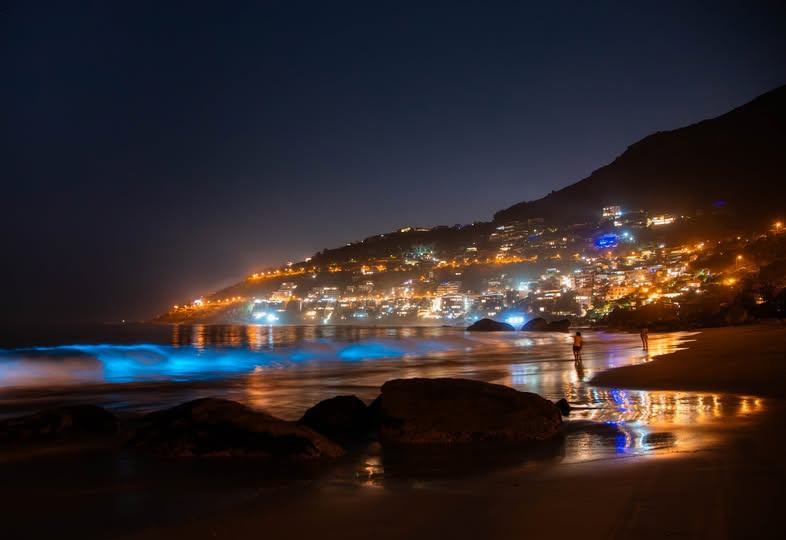
Bioluminescence is a cold light produced by a chemical reaction inside living organisms. Notably tiny plankton called dinoflagellates, mainly Noctiluca scintillans. They produce a compound called luciferin and an enzyme called luciferase. When disturbed by waves or movement, luciferin reacts with oxygen and releases a blue-green light.
Dinoflagellates gather near the surface in warm, nutrient-rich water. When they multiply in large numbers, they form blooms that may turn the sea red or brown during the day, known as a red tide. Some of this algae is toxic and can harm fish or shellfish. Noctiluca scintillans blooms along Cape Town’s coast are usually non-toxic but can cause oxygen loss when they decay, sometimes leading to fish strandings.
Bioluminescence occurs at various times, lasting three to five nights. The best viewing conditions are clear days, light wind, and low swell.
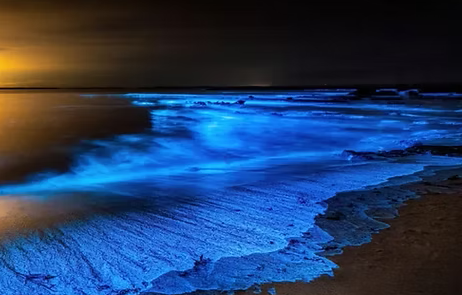
Common viewing spots include: The False Bay coast from Muizenberg to Simon’s Town, and on the Other side of the bay at Gordon’s Bay and Kogel Bay. On the West coast, Bloubergstrand and Melkbosstrand to Yzerfontein and Langebaan, even as far as Paternoster, St Helena Bay, Elands Bay and Lamberts Bay where they have occasional blooms that are sometimes toxic.
On the Atlantic Seaboard, Clifton and Camps Bay and Hout Bay haveOccasional displays, especially after several warm, still days. Other places along the coast include Southern Cape / Garden Route Mossel Bay, Wilderness, and Sedgefield. At Knysna Lagoon and Buffalo Bay, plankton can glow in the shallows and lagoon channels. The plankton can also be found sometimes at Plettenberg Bay and Keurbooms Beach. Victoria Bay and Herolds Bay (near George) also have Short-lived but bright displays.
The glow is usually visible after 8 p.m. on dark, moonless nights.. Gentle movement in shallow water can trigger the light.
- Do not eat shellfish or rock lobsters washed up after a red tide.
- Avoid swimming if the sea smells bad or if you have open cuts.
- Follow official notices from the Department of Forestry, Fisheries and Environment (DFFE) about harmful algal blooms.
- Monitoring water quality and reducing pollution are key to keeping coastal waters safe and preserving this natural event.
- Best months: February to April
Bluebottles
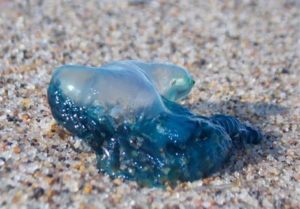
Bluebottles, also known as the Portuguese man o’ war (Physalia physalis), are often mistaken for jellyfish but are actually colonies of tiny specialised animals living together as one organism (a siphonophore). They are recognised by their blue-purple gas-filled float that sits on the surface of the sea, with long stinging tentacles trailing below. Bluebottles cannot swim and are carried by wind and ocean currents, which is why they sometimes wash up on Western Cape beaches. They feed on small fish, plankton, and invertebrates, and their tentacles can deliver a painful sting to humans.
What can I do if I get stung by a bluebottle?
The stings are not dangerous. Most stings cause red welts that usually subside within a few hours, and vinegar can help ease the discomfort. Natural predators include sea turtles and ocean sunfish.
- Colourdots is an independent regional information resource for the Western Cape.
Learn more about the project HERE
