
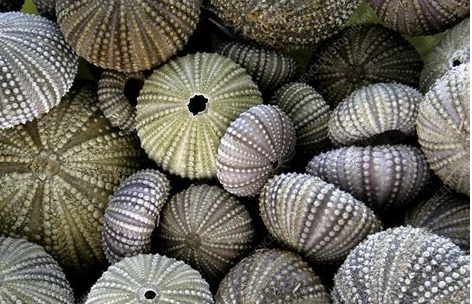
Illustrated guide for shells and small marine creatures found in rockpools and on beaches in the Western Cape
Western Cape Seashells – Identification and Illustrated Guide
The Western Cape coastline is home to many shells and small marine animals that can be seen in rock pools and on beaches after storms or low tide. This illustrated guide helps identify common shells, anemones, mussels and other shoreline species found along the Western Cape coast of South Africa.
Identify common shells found along the Western Cape coastline, including beaches around Cape Town and the Garden Route.
If you plan to collect shells, please follow local regulations and take only empty shells.
See our Western Cape shell collecting rules, see also Rock pools and shoreline life
Molluscs (Shells, squid and octopus)
Finger ploughshell
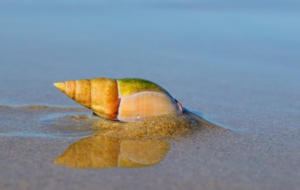
Several species occur. A flesh-coloured shell with a smooth surface and a broad, flat foot. Lives on sandy, wave-exposed beaches where it scavenges carrion, locating food by scent.
Size: up to 6 cm
Violet snail
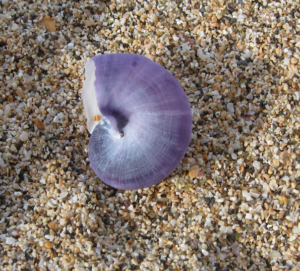
A delicate purple spiral shell. Floats upside-down at the sea surface, suspended by a raft of mucus bubbles, and feeds mainly on bluebottles.
Size: about 3 cm in diameter
Spiny chiton
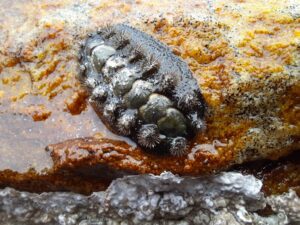
A flat, slug-like mollusc with eight overlapping plates and small spines around the edge. Attached to rocks in the intertidal zone. About ten species occur in the Western Cape.
Size: up to 7 cm
Common cuttlefish
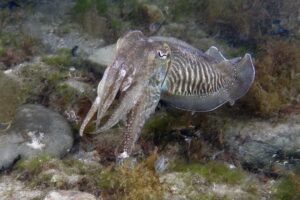
A mollusc related to squid with ten limbs. Two long tentacles grasp prey, which is subdued with venom. The internal shell (cuttlebone) is often found washed up on beaches.
Size: up to 15 cm
Common octopus
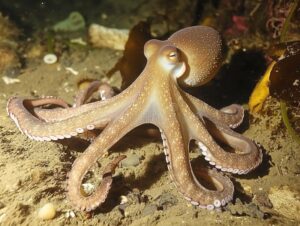
Eight-armed mollusc with two rows of suckers on each arm. Hides in rock pools and reefs where it ambushes crabs and lobsters. Grows rapidly and reaches adult size within a year.
Size: up to 60 cm arm span
Chokka squid
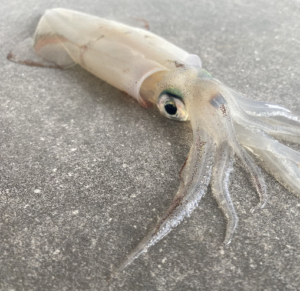
Cigar-shaped squid with eight short arms and two long tentacles. Fins run along the mantle. Hunts small fish and is commonly caught by anglers using lures.
Size: 20–30 cm
White mussel
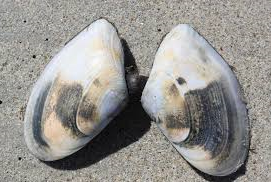
Two whitish triangular shells with wavy ridges along the upper edge. Lives on sandy beaches in strong wave action. Used for bait and also eaten.
Minimum legal size: 3.5 cm
Black mussel
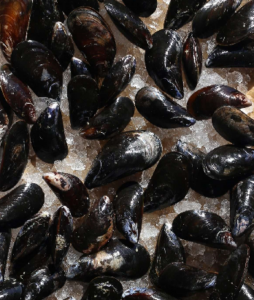
A native bivalve mollusc with a smooth, shiny black shell. Occurs in dense colonies on mid- to lower-shore rocks where it attaches firmly and filters plankton from the water. An important part of the coastal ecosystem and is traditionally harvested in some areas.
Size: up to 15 cm
Venus ear (Siffie)
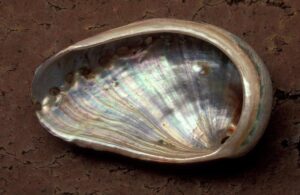
Cream-coloured ear-shaped shell with a row of small holes near the rim and a pearly interior. Found at low tide on wave-exposed reefs.
Minimum legal size: 3.5 cm
Abalone (Perlemoen)
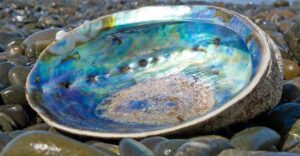
Large ear-shaped shell with a row of holes and a mother-of-pearl interior. Juveniles occur in rock pools; adults live in kelp beds. Heavily protected, and harvesting requires a permit.
Size: up to 20 cm
Minimum legal size: about 12 cm
Granular limpet
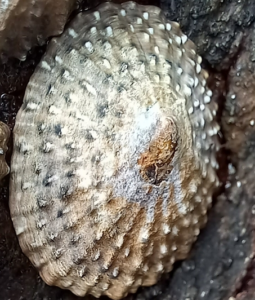
Oval dome-shaped shell with ribbing and a bluish-white interior. Forms colonies on rocks.
Size: up to 8 cm
Pear limpet
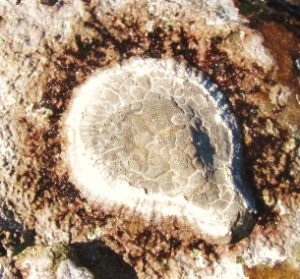
Often covered in algae and lives in colonies on exposed rocks. Grazes on algae in the splash zone.
Size: up to 7 cm
Cape false limpet
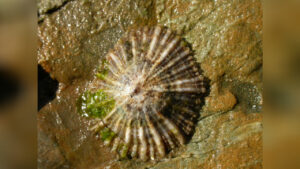
Small oval shell with dark radiating ribs that do not extend beyond the edge. Found on mid-shore rocks and in pools, often sand-covered.
Size: about 2 cm
Variegated topshell
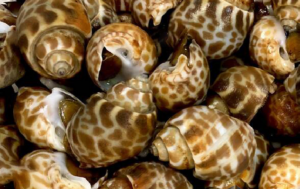
Small patterned round shell. Mobile on upper-shore rocks, feeding on algae.
Size: about 1 cm
Giant periwinkle (Alikreukel)
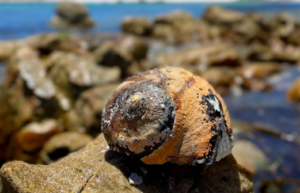
Large spiral shell sealed by a thick white disc. These “doors” are often washed up on beaches. Edible but regulated.
Size: up to 10 cm
Minimum harvest size: 6.4 cm
Ridged burnupena
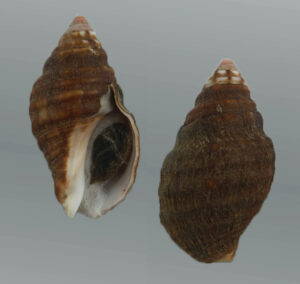
A scavenging snail with ridges near the shell tip, often covered in green algae. Found near the low-tide zone feeding on carrion.
Size: about 4 cm
Crustaceans (Crabs, lobsters and barnacles)
Goose barnacle
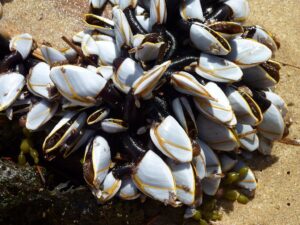
Crustacean with five connected shell plates. Forms colonies on driftwood and floating objects, filtering food with feathery limbs.
Size: about 3 cm
Volcano barnacle
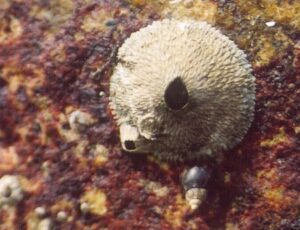
Grey cone-shaped barnacle attached to rocks in the intertidal zone.
Size: about 2 cm
Eight-shell barnacle
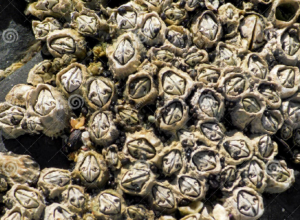
Whitish barnacle made of eight plates, forming dense colonies on rocks and filtering plankton.
Size: about 2 cm
West Coast rock lobster (crayfish)
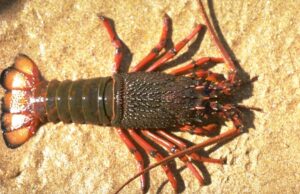
A ten-legged crustacean living on rocky reefs, feeding on mussels and urchins. A valued seafood species with strict harvesting regulations.
Size: up to 30 cm
Minimum legal size: 7.5 cm carapace length
Cape rock crab
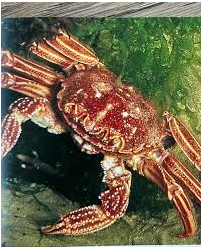
Russet-coloured crab with pale ridges on the legs and white-spotted pincers. Found in pools and shallow reefs, feeding on small invertebrates.
Size: body is about 5 cm
Shore crab
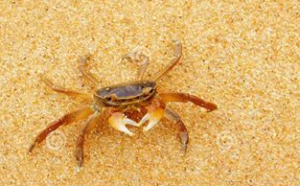
Brownish-orange crab is active at night on the upper shore, feeding mainly on detritus.
Size: body is about 3 cm
European shore crab
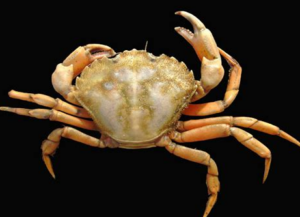
Introduced greenish crab found in sheltered areas. Feeds on small molluscs and threatens local shellfish populations.
Size: body is about 5 cm
Echinoderms (Starfish, urchins and sea cucumbers)
Cape urchin
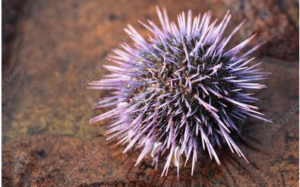
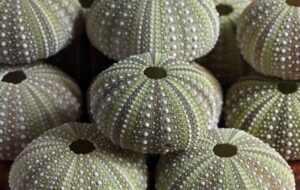 Round spiny echinoderm, usually purple, red, green or pink. Found in rock pools feeding on algae.
Size: 1–7 cm
Pansy shell
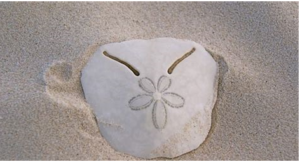
(Echinodiscus bisperforatus) A flat, disc-shaped sand dollar (a type of sea urchin). The upper surface shows a faint flower-like petal pattern of pores used by tube feet, and the rear half has two narrow slits. Living animals are covered in fine velvety spines, which fall off after they die. It lives just under the sand in sheltered areas, feeding on organic particles. Found from Cape Agulhas, along the Garden Route and northwards along the East African coast. Although commonly called a shell, it is actually a relative of sea urchins.
Dwarf cushion star
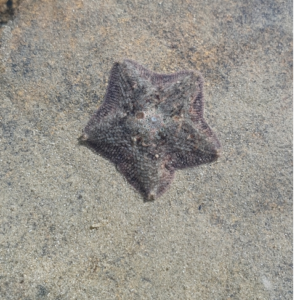
Small flat star-shaped echinoderm, well camouflaged in rock pools. Feeds on algae and lays eggs beneath rocks.
Size: about 2 cm
Elegant feather star
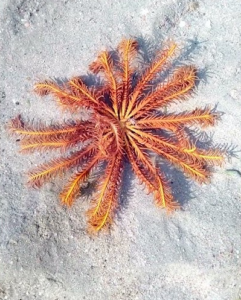
Has ten delicate arms and attaches to rocks, filtering microscopic organisms from the water.
Spiny starfish
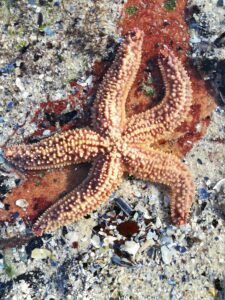
Grey or orange starfish with knobbly spines. Found on rocky shores feeding on mussels.
Size: up to 20 cm
Red starfish
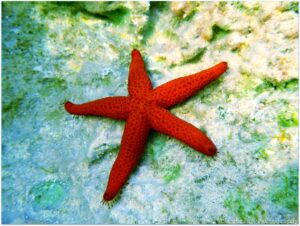
Deep-orange starfish with a scaly surface. Moves slowly over rocks, feeding on detritus.
Size: about 9 cm
Serpent-skinned brittle star
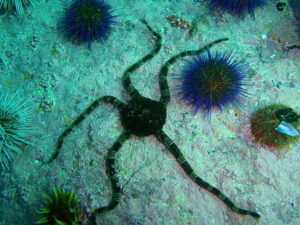
Spider-like echinoderm with long, fragile arms. Lives under rocks in rock pools.
Size: about 5 cm
Red-chested sea cucumber
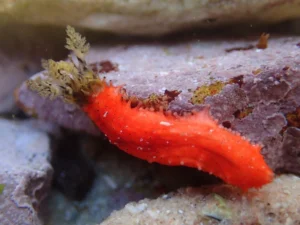
Small cucumber-shaped echinoderm using feathery tentacles to capture tiny organisms.
Size: 2–4 cm
Other Shore Life
Sponges
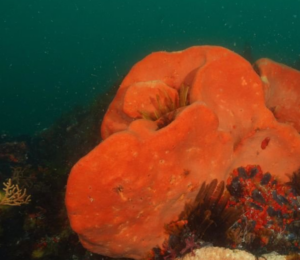
Simple filter-feeding animals are attached to rocks below the tide zone.
Cape reef worm
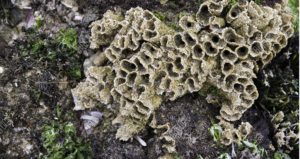
Lives in colonies inside tubes made of sand grains and shell fragments on rocky shores.
False plum anemone
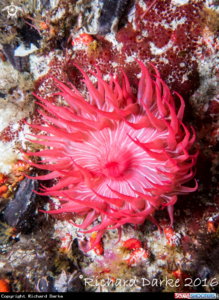
Dark red anemone living in crevices and pools. Uses stinging tentacles to catch prey.
Size: up to 10 cm
Sandy anemone
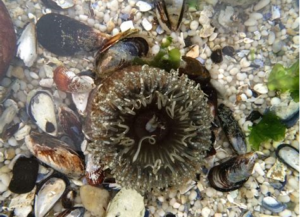
Occurs on sandy rock-pool floors. Often covered in sand grains stuck to its body.
Size: about 8 cm
Root-mouthed jellyfish
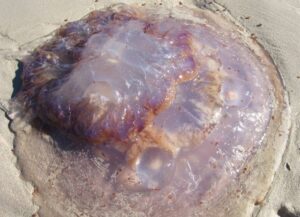
Large mushroom-shaped jellyfish often washed ashore. Lacks long stinging tentacles and filters tiny prey.
Size: up to 50 cm+
Bluebottle (Physalia)
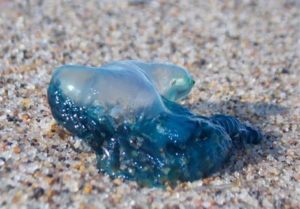
Floating colonial organism with long stinging tentacles. Avoid touching.
Ascidian (Sea squirt)
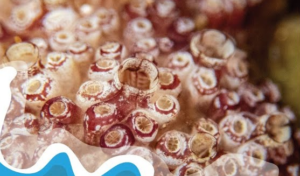
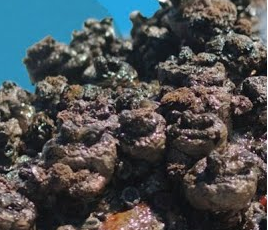
Wrinkled-skinned filter feeder attached to rocks, pumping water in and out through two siphons. Sometimes used as bait. (Red bait)
Size: up to 15 cm
Mediterranean mussel
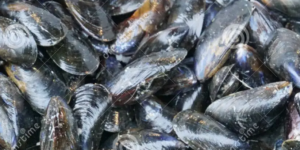
Non-native species form dense colonies on mid-shore rocks and often outcompete native black mussels.
Size: up to 14 cm
“Before collecting shells, see the Western Cape shell collecting rules.”
