
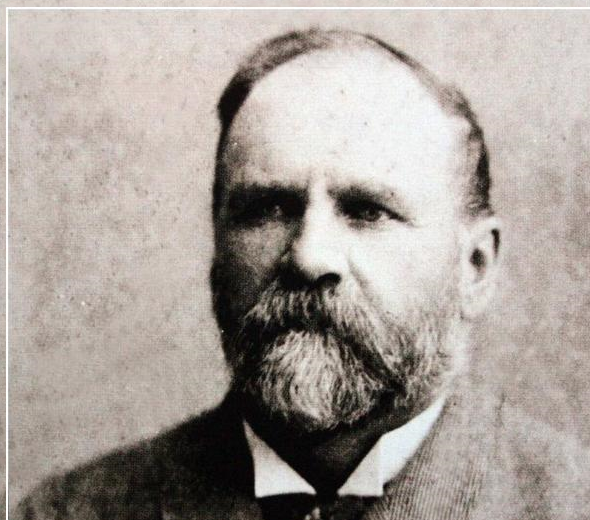
Thomas Charles John Bain and the Roads That Opened the Cape
Thomas Charles John Bain is remembered as one of the most important road engineers in South African history. During the second half of the nineteenth century, he planned and built a network of mountain passes and roads that permanently changed how the Cape Colony functioned. Many of these routes remain in use today and still follow the lines he surveyed more than 140 years ago.
His work connected the narrow coastal plain of the Cape with the interior. It opened valleys, farming districts, forests, and Karoo towns that rugged mountain ranges had previously isolated. In practical terms, Bain’s roads made settlement, trade, and administration possible across large parts of what is now the Western Cape.
Early life at the Cape frontier
Thomas Bain was born on 29 September 1830 in Graaff-Reinet, which was then a frontier town of the Cape Colony. He was the second son of Andrew Geddes Bain, a Scottish-born engineer, geologist, and road builder who had arrived in the Cape in 1816.
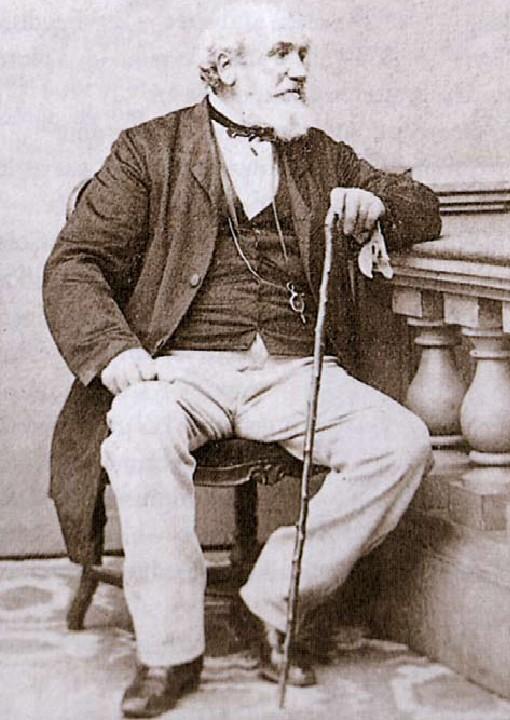
Andrew Geddes Bain
Like many settler children of the period, Thomas and his siblings were educated largely at home. Their schooling was practical and shaped by frontier life. During the War of the Axe in 1846, Thomas served as a volunteer and helped protect women and children sheltering in Fort Beaufort’s church. This early exposure to hardship and responsibility shaped his later career.
Learning the craft of road building
Thomas Bain’s professional life was closely tied to that of his father. From 1848 to 1854, he served a formal apprenticeship under Andrew Bain as Assistant Inspector of Roads. During this period, he worked on some of the most important early mountain passes in the Cape, including Michell’s Pass near Ceres and Bain’s Kloof between Wellington and Ceres.
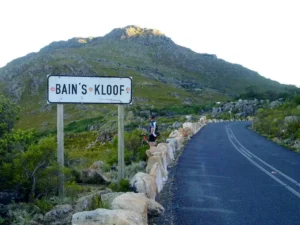
These projects were part of an ambitious road-building programme introduced by Surveyor-General Charles Michell and Colonial Secretary John Montagu. They aimed to break through the mountain barriers that limited movement between the coast and the interior.
In 1854, Thomas passed the government civil engineering examinations with top marks and was promoted to Inspector of Roads for the Western Province. From this point, he carried increasing responsibility for the planning and execution of major routes.
Roads, passes, and access to the interior
Over a forty-year career, Thomas Bain was involved in the construction of more than 900 kilometres of roads and at least 24 major mountain passes. His work stretched across the Western Cape, the Little Karoo, the Garden Route, and into the interior.
One of his first independent projects was Grey’s Pass near Citrusdal, completed in 1858. This route opened the Olifants River Valley to the Swartland and the Cape Town market, allowing agricultural produce to move more efficiently.
Another major achievement was the long coastal road between George and Knysna. Construction began in 1867 and took fifteen years to complete. Before this road existed, travellers faced dangerous river crossings such as Kaaimansgat. The new route linked Knysna’s forests to the rest of the colony and supported the growth of the timber industry.
Bain went on to build or supervise a series of passes through the Langeberg and Outeniqua ranges, including Robinson Pass, Tradouw Pass, Garcia’s Pass, Burgers Pass, and Kogmanskloof. These routes improved access between inland towns such as Oudtshoorn, Barrydale, Montagu, and Riversdale and the coastal ports.
Engineering style and methods
The Bain family became known for their use of dry-stone retaining walls, many of which still stand today. These walls, built without mortar, were designed to flex slightly under pressure and survive heavy rains and rockfalls.
Bain’s surveys were precise, and his gradients were carefully planned to allow ox wagons and later vehicles to move safely through steep terrain. His roads were not built for speed, but for durability and reliability.
Later career and broader work
In 1873, Bain was temporarily transferred to the Railway Department as a district engineer. He worked on rail extensions through mountain passes near Tulbagh before returning to the Road Department due to staff shortages.
In 1888, he resigned from road construction and became the Colony’s Irrigation and Geological Surveyor. In this role, he designed reservoirs, investigated mineral resources, collected fossils, and contributed to geological mapping. His work included surveys of gold fields, coal deposits, and water supply schemes.
Personal life
Thomas Bain married Johanna Hermina de Smidt in 1854. They had thirteen children and moved frequently as his work required. Despite long absences and difficult conditions, the family remained close.
In later life, they settled at Woodside in Rondebosch, Cape Town. Bain died there on his 63rd birthday, 29 September 1893.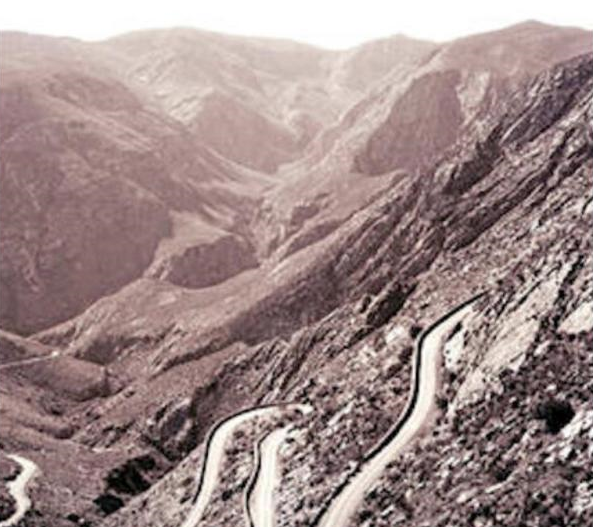
Legacy in the Western Cape
Thomas Bain’s legacy is visible across the Western Cape landscape. Passes such as Swartberg, Prince Alfred’s Pass, Tradouw, and Garcia’s Pass remain important transport routes and popular scenic drives.
His work helped open the interior of the Cape Colony, supported agricultural expansion, and shaped settlement patterns that still exist today. Plaques and memorials across the province mark his contribution.
More than a century later, Bain’s roads continue to carry travellers through mountains that once formed natural barriers. They stand as lasting examples of practical engineering adapted to the Cape’s terrain.
See a list of some of the Mountain passes built by Thomas Bain HERE
- Colourdots is an independent regional information resource for the Western Cape.
Learn more about the project HERE
