
The Cape Flats was once a very different landscape from the densely settled area we know today. In 1811, the English naturalist William John Burchell noted that the deep sand made travelling by cart or wagon extremely difficult. The unstable dunes were a major obstacle to movement between Cape Town and the settlements and farms to the east.
The problem worsened with the loss of natural vegetation. Firewood collectors cut many of the indigenous shrubs and trees that helped hold the sand in place. Colonial authorities eventually tried to stabilise the dunes by planting Australian species, particularly wattles and hakeas. Wattles were first introduced in 1827, with large-scale planting taking place during the 1840s and 1850s and continuing into the later 19th century.
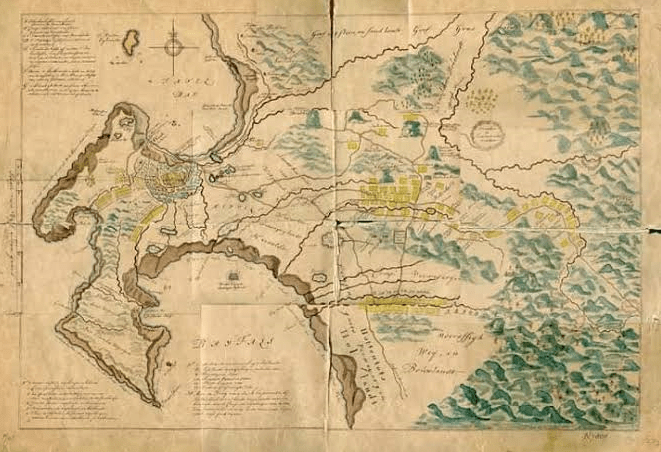
The plantings helped to stabilise the sand, but they also introduced invasive species that spread across large parts of the Cape Flats. Rooikrans and other alien vegetation eventually became characteristic of the landscape. Efforts to remove invasive plants and restore indigenous vegetation have continued into the modern era.
By the middle of the 20th century, much of the Cape Flats was still sparsely developed. A major road crossed the sandy plain between Cape Town and the Strand, passing through dense stands of alien vegetation. There were farms, vegetable plots and scattered houses, while parts of the Flats were used for military exercises. Some areas remained sufficiently undeveloped for antelope and other wildlife to occur.
For many rural households, everyday life was basic. Water was collected in tanks, and oil lamps were used for lighting. Vegetable farming continued in areas where the soil could be cultivated, although the sandy conditions made agriculture difficult.
This landscape changed rapidly from the middle of the 20th century onwards. Urban development spread across the Flats, and large residential areas were established. Apartheid’s Group Areas policies played a major role in shaping the pattern of settlement. People classified as Coloured were forcibly removed from areas of Cape Town that were designated for other racial groups, and many were relocated to new housing areas on the Cape Flats. Black South Africans were also affected by apartheid’s influx-control and residential policies, and townships including Gugulethu and later Khayelitsha developed on the Flats.
As the population grew, informal settlements also expanded. Shacks made from corrugated iron, timber and other materials appeared alongside formal housing developments. The demand for housing continued after the end of apartheid, as population growth and migration added to an already substantial housing shortage. Government housing programmes, including the Reconstruction and Development Programme (RDP), subsequently provided large numbers of new homes.
The Cape Flats is now home to a large and diverse population. Different areas developed distinct linguistic and cultural identities, although these have become increasingly mixed over time. Afrikaans, English and isiXhosa are widely spoken, and the area includes communities with many different religious and cultural traditions.
The Cape Flats has also produced an important cultural history. Its music includes the jazz of Abdullah Ibrahim and Basil Coetzee, with Ibrahim’s Mannenberg becoming particularly associated with Cape Town’s Coloured communities. Later generations brought new forms of popular music and hip-hop. The Flats has also produced a strong tradition of community organisations working on housing, education, poverty, health and other local issues.
The Cape Flats has therefore undergone an extraordinary transformation within a relatively short period. A landscape once dominated by dunes, scrub and scattered farms has become a large part of modern Cape Town, shaped by environmental change, urbanisation, apartheid’s policies and the communities that have made the area their home.
