
The Anglo-Boer Wars impact on the Western Cape
The Anglo-Boer Wars were two conflicts between the British Empire and the Boer republics in southern Africa. The First Anglo-Boer War took place from 1880 to 1881 and ended with Boer self-government being restored in the Transvaal. The Second Anglo-Boer War lasted from 1899 to 1902 and ended with British victory and the annexation of the Boer republics.
Although most fighting occurred outside the Western Cape, the region played a central strategic role. Cape Town, coastal ports, railways, hospitals, prisons, and military administration in the Cape were critical to the British war effort. The wars also deeply affected Cape society, politics, and later South African history.
Who were the Boers?
The Boers were descendants of European settlers, mainly Dutch, with German and French Huguenot roots. The word “Boer” comes from the Dutch word for farmer. They settled at the Cape from 1652 onwards and gradually moved inland.
Many Boers left the Cape Colony during the 1830s and 1840s in what became known as the Great Trek. This was because they wanted political independence and freedom from British rule. They established two independent republics in the interior The South African Republic, called the Transvaal and the Orange Free State.
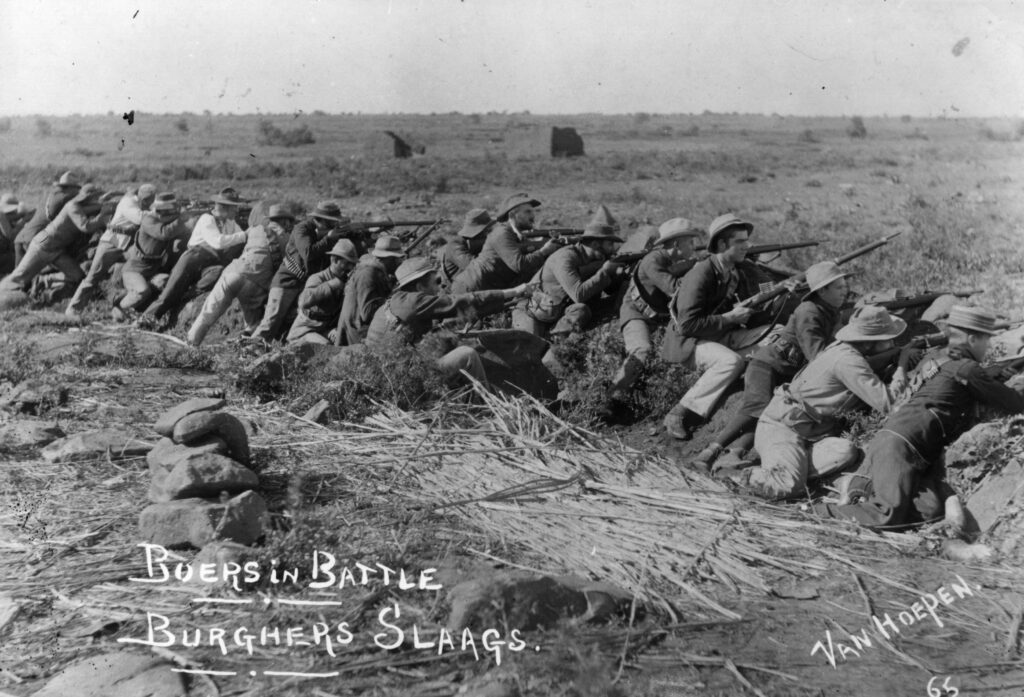
The First Anglo-Boer War (1880–1881)
Britain annexed the Transvaal in 1877. Most Boers rejected British control, especially with regards taxation and political interference. Resistance grew, and open conflict began in December 1880. The war was fought mainly in the Transvaal. It was a short conflict that lasted about ten weeks. The British troops were ill-prepared, and the Boer forces used mobility, marksmanship, and their knowledge of the local terrain
The decisive moment came at the Battle of Majuba Hill in February 1881, where British forces suffered a major defeat. Britain agreed to restore self-government to the Transvaal under British oversight. The settlement did not resolve deeper political and economic tensions.
The Second Anglo-Boer War (1899–1902)
The causes of the Second War were complex and interconnected. Key factors included British imperial ambition, Boer resistance to British control, political tension over voting rights for British settlers (Uitlanders), and the failed Jameson Raid of 1895. The discovery of gold on the Witwatersrand in 1886 was key.
Gold transformed the Transvaal into a major economic power. Britain depended heavily on gold for its financial system and naturally sought control of the region.
Breakdown of diplomacy
British High Commissioner Alfred Milner demanded political reforms in the Transvaal. President Paul Kruger made limited concessions, but negotiations failed. In October 1899, the Boer republics issued an ultimatum demanding British troop withdrawal. Britain refused, and the war began on 11 October 1899.
Phase 1: Early Boer successes (1899–1900)
Boer forces launched pre-emptive attacks into British territories, including Natal and parts of the Cape Colony. Key features included the sieges of Kimberley, Mafeking, and Ladysmith, and the Boer victories during “Black Week” (December 1899). Some Cape colonists rebelled and joined the Boer forces. Northern areas of the Cape Colony experienced unrest and divided loyalties.
Phase 2: British advance (1900)
Large numbers of British reinforcements arrived via Cape Town. Under Lord Roberts and Lord Kitchener, railways were used to move troops rapidly. Bloemfontein was occupied in February 1900, and Johannesburg and Pretoria fell by mid-1900. President Kruger escaped into exile in Europe.
Phase 3: Guerrilla war and scorched earth (1900–1902)
After losing their capitals, Boer commandos continued fighting using guerrilla tactics. The British response included the systematic destruction of farms, the burning of homes and crops, the confiscation of livestock and the construction of blockhouse lines. As a result, there was widespread civilian suffering.
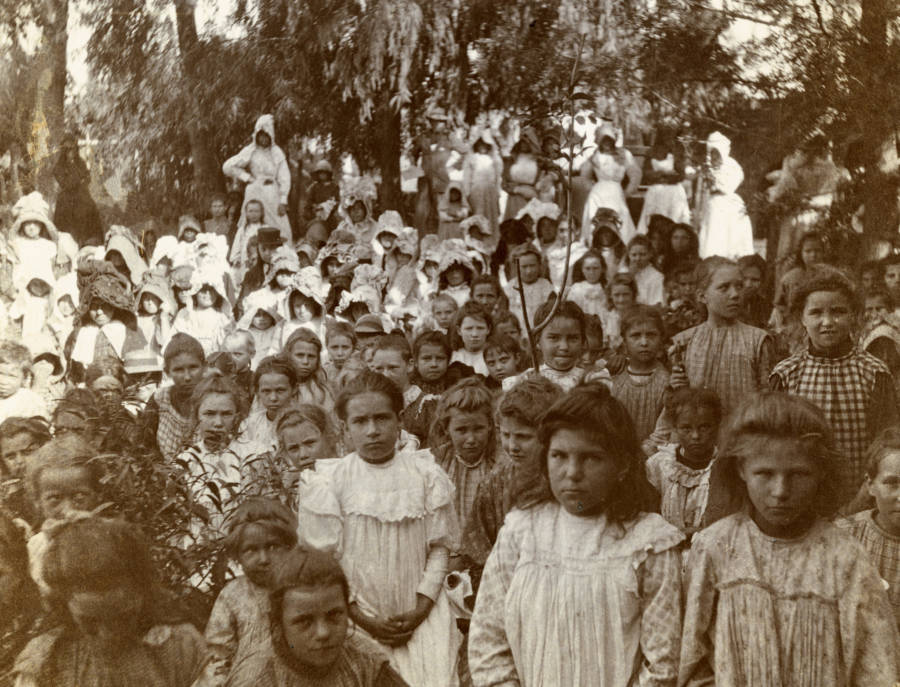
Concentration camps and civilian impact
The British established concentration camps to house displaced Boer civilians and black farm labourers. Conditions were poor with overcrowding, inadequate food and little medical care. At least 28,000 Boer civilians died, mostly children, and at least 23,000 black civilians died.
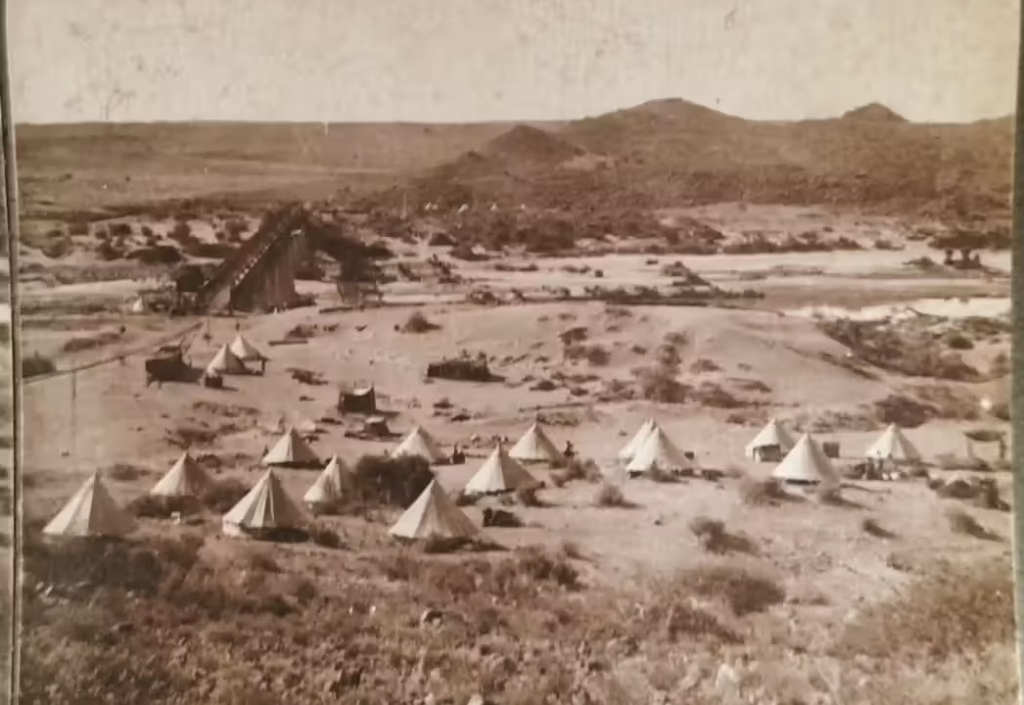
Real cost
More than 30,000 Boer farms were destroyed, and entire rural communities were wiped out. This humanitarian disaster damaged Britain’s international reputation and left long-term trauma within South African society.
The role of the Western Cape
Cape Town was the primary entry point for British troops. Soldiers arrived from Britain and other parts of the empire. Weapons, ammunition, horses, food and medical supplies were procured from the Cape. Harbours, roads and bridges were guarded. Forts were built, and harbours were expanded.
The rail infrastructure in the Cape was critical. Rail lines connected Cape Town to Kimberley, Cape Town to De Aar, and De Aar to the interior war zones. Without Cape railways, British logistics would have collapsed.
Hospitals and prisons
The Western Cape hosted military hospitals treating wounded soldiers. There were prisoner-of-war camps and detention facilities for rebels. Even Robben Island was used to hold Boer prisoners.
Political divisions
The war caused deep political tension within the Cape Colony. Some Cape Afrikaners supported the Boers, but others remained loyal to Britain. Martial law was imposed in parts of the Cape
End of the war
The war ended on 31 May 1902 with the Treaty of Vereeniging. The terms included the Boer republics accepting British sovereignty, with some promises of future self-government and reconstruction aid for devastated areas
Aftermath and legacy
This internal conflict shaped later South African politics. It resulted in the creation of the Union of South Africa in 1910, the formation of the African National Congress in 1912, the rise of Afrikaner nationalism and the establishment of the National Party in 1914.
Long-term impact
The wars reshaped South Africa’s political structure, deepened racial inequality and contributed to the foundations of apartheid. Promises of political rights to black South Africans who supported Britain were largely broken.
The Anglo-Boer Wars were not minor colonial conflicts. They were modern wars involving industrial logistics, civilian internment, and total war tactics. Understanding these wars is essential to understanding South Africa’s later history. The Anglo-Boer Wars remain among the most destructive conflicts in South African history.
Interesting fact:
Winston Churchill was employed as a war correspondent for the Morning Post. He was captured by Boer forces during an attack on an armoured train and held as a prisoner of war in Pretoria. In December 1899, he escaped from captivity and travelled nearly 480 km to Portuguese Lourenço Marques in Delagoa Bay.
- Colourdots is an independent regional information resource for the Western Cape.
Learn more about the project HERE
