
The first peoples of the Western Cape are often grouped under the term “Khoisan,” a label primarily used in linguistic and anthropological research. It refers broadly to communities that historically spoke click languages, distinguishing them from later Bantu-speaking farming societies.
This term does not refer to a single historical identity. The people of the Western Cape identified themselves by specific clan and regional names, not by collective labels such as “Khoi”, “San”, or “Khoisan”. These umbrella terms were shaped largely by colonial and academic classification and should be understood as convenient categories rather than lived identities.
The Western Cape before colonial settlement
Before European arrival, the Western Cape was inhabited by a number of distinct indigenous communities, some practising pastoralism and others living as hunter-gatherers. These groups moved seasonally across the landscape, following grazing, water, and food sources.
Material culture reflected this mobility, so these people had light, temporary dwellings and limited possessions. These were designed for transport rather than permanence.
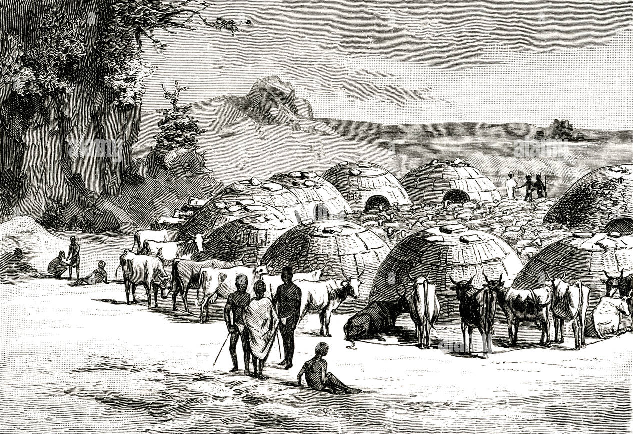
Among hunter-gatherer groups, strong emphasis was placed on social equality and shared resources.. Ideas of land use and ownership differed significantly from European concepts, which later contributed to conflict and misunderstanding.
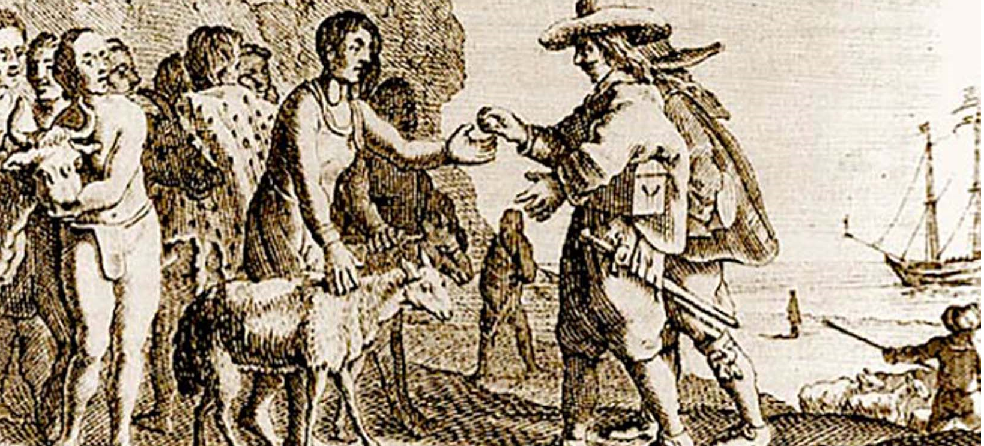
Early European settlers traded with the Khoi for livestock, but conflict grew as farmers began taking land and the Khoi became reluctant to give up their animals. This led to displacement, with many Khoi forced into harsher regions or absorbed into settler society as labourers. Some settlers intermarried with Khoi communities, forming mixed-descent groups known as Basters.
Khoi pastoralists had lived in southern Africa for over 2,000 years, though their origins and development are more complex than once believed, with strong links to San hunter-gatherers. Over time, boundaries between Khoi, San, and mixed communities became blurred through interaction, intermarriage, and shared livelihoods.
By the early 1900s, traditional Khoi pastoral life had largely declined. Some communities retained land through mission stations, combining livestock farming with wage labour to survive.ry of the first peoples of the Western Cape
Oral tradition and belief
Spiritual life in the Western Cape was rooted in oral tradition. There were no written records. Knowledge about religion, healing, history, and the natural world was transmitted through storytelling, ritual, and performance.
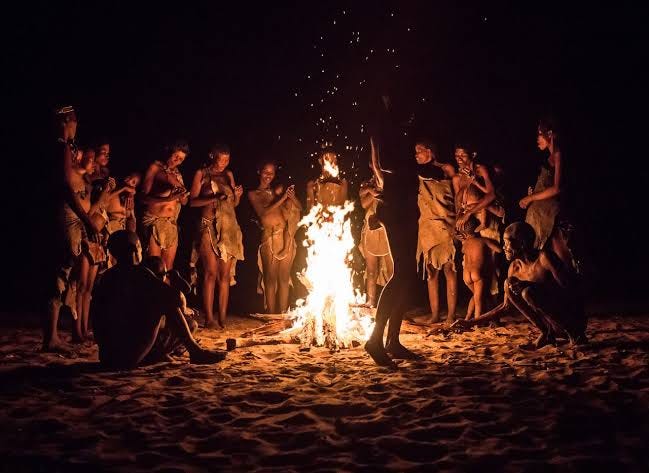
Because stories were passed down verbally, there were multiple versions of the same myth. These beliefs varied between communities.
The San and Khoikhoi people both enjoyed singing songs and telling stories. Find some of those stories HERE
Spiritual worldviews
There was no single religion shared by all indigenous groups of the Western Cape. Instead, belief systems reflected close relationships between humans, animals, ancestors and natural forces.
Many traditions understood the spiritual and physical worlds as deeply interconnected. Transformation between human and animal forms appears frequently in stories, as does the idea that life continues after death.
Some pastoral communities buried the deceased with valued possessions, reflecting beliefs about an afterlife.
Spiritual figures and stories
Spiritual figures varied by community and language group. The examples below reflect traditions recorded in parts of the Western Cape and surrounding regions, but should not be treated as universal. These figures often embodied moral lessons, natural phenomena, or historical memory.
-
Kaggen, often associated with the praying mantis, appears in several traditions as a creator or trickster figure
-
Tsui-Goab is remembered in some communities as a powerful deity linked to creation and protection
-
Heitsi-Eibib appears in stories as a culture hero, traveller, or ancestral figure.
-
Language and identity
Language was central to identity among the first people of the Cape. The name Khoikhoi is commonly understood to mean “men of men” or “the real people”, reflecting a strong sense of self-definition and belonging. Communities identified themselves by clan, landscape, and language, rather than as a single, unified group.
Khoikhoi societies were organised into clans such as the Namaqua, Cochoqua, Chainouqua, Hessequa, Gouriqua, Goringhaiqua, and Gonaqua. Modern descendants include communities known today as the Nama, Griqua (Grikwa), and Koranna (Koraqua), many of whom are recognised as distinct groups. Each community had its own dialect or language, reinforcing the fact that the Western Cape was home to many different peoples, not one homogenous population.
The indigenous languages of the region formed part of what are broadly referred to as the Khoisan languages, among the oldest known languages in the world. These languages were once spoken across much of southern Africa, from southern Angola through Namibia and Botswana, across South Africa, and as far east as Tanzania. Today, most have disappeared from the Cape, with surviving speakers mainly found in Namibia and Botswana and only a few in South Africa.
Khoisan languages are best known for their use of click consonants, represented in writing by symbols such as ǀ, ǁ, and ǃ, each indicating a different sound. These clicks are rare globally and developed naturally in southern Africa. Through long contact between communities, they were later absorbed into several Bantu languages, including Xhosa and Zulu, leaving a lasting linguistic influence even where Khoisan languages themselves died out.
Despite their shared use of clicks, Khoisan languages differ greatly in grammar, vocabulary, and structure. For this reason, the term Khoisan is used mainly as a descriptive label rather than as evidence of a single language family. Colonisation, land dispossession, and social disruption from the eighteenth century onwards led to the rapid decline of these languages in the Cape, though not before they influenced Afrikaans, local African languages, and many place names.
Group names often reflected geography or social identity. Broad community names included |Xam-ka !E, Nǁngǂe, and Klou-kle, while smaller groups were identified with even greater precision. The well-known diviner ǁKabbo, for example, came from a group called Sʼwa-ka !E, meaning people of the plains. Historical records refer to clans such as ǃURIǁʼAIKUA and ǃURIǁʼAIǀONA, where Uri meant highland, ǁʼAi referred to clan, -kua indicated plural, and ǀOna meant children.
These clans are regarded as ancestors of the!ORAKHOESIB, or !Ora Nation, often referred to today as the Korana (the name without the click). Even the word Xhosa is believed to originate from a Khoi term meaning “angry men”, another reminder of how deeply these early languages shaped later identities.
While many Khoisan languages are now extinct or endangered, their legacy remains embedded in the language, landscape, and cultural memory of the Western Cape. They stand as evidence that the region was shaped by complex, long-established societies long before European settlement.
Tribes in the Western Cape
- Chainouoqua
- Hawequa (also called “Obiqua”. possible historical subgroup of the Chainouqua)
- Cochoqua
- Hessequa
- Chairiguriqua
- !Amaǁua (also called “Omaqua”, later renamed to “Portugies”.)
Tribes of the Peninsula
Goringhaiqua: The Goringhaiqua are a single tribal authority made from the two houses of the Goringhaikona and Gorachouqua.
Khoikhoi Words and Western Cape Place Names
These Khoikhoi words appear in Western Cape place names and reflect meanings linked to landscape, resources, and early communities.
- Hessequa – means ‘people of the trees’.
- Matzikama means ‘place of water ’. The name is combined from the words ‘matzi’ – he gives – and ‘kama’ – water.
- Outeniqua -Honey people, they who bear honey.
- Camissa is a Khoisan word ǁk̮amis sa or ǁkhamis sa as opposed to ǁuriǁamma. which is seawater and therefore saline water, not for drinking
- Kammanassie Mountain Range. The Mountain of Water
- Table Mountain- Huri ‡oaxa, or Hoerikwaggo, “where the sea rises”
- Dispore Kamma -Hot water (as in hot springs in the Cederberg and other places)
- Kannakamkanna,- river without end.(Riviersonderend)
Everyday Khoikhoi Words and Their Meanings
ǃGâi ǁgoa Good morning
ǃGâi Tsēs Good Day
ǃGâise ī reǃ Goodbye
Toxoba Please
Kai Aios – Thanks a lot
Dagga – cannabis,
Nai – sex
Kak – shit
!guru – thunder
Rock art and ritual landscapes
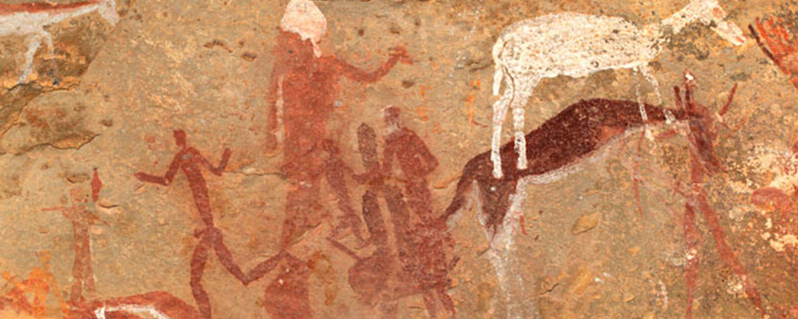
The Western Cape contains some of the oldest rock art in Southern Africa, particularly in the mountains and caves. These paintings were not decorative. They are widely understood to reflect spiritual beliefs, trance rituals, healing practices and relationships between humans and animals. Rock art formed part of a broader sacred landscape, linked to storytelling and ritual use of space.
Disruption and survival
The arrival of European settlers in the 17th century brought major disruption, which involved loss of land and grazing routes, restrictions on movement, disease, violent conflict and the breakdown of traditional economies.
These changes led to severe population decline and displacement. Many descendants were absorbed into colonial society or later classified under imposed racial categories.
Despite this, indigenous identities, languages, and belief systems did not disappear. They adapted, survived, and continue to be reclaimed and studied today.
A careful modern understanding
Modern research increasingly recognises that the Western Cape was home to multiple indigenous nations and clans. Broad labels are useful for study, but limited in accuracy. Indigenous perspectives and oral histories are essential to understanding the past
Any account of indigenous belief systems in the Western Cape must therefore balance academic research with respect for local identities, complexity, and continuity.
Further reading: Reclaiming the forgotten language
You may be interested in the healing traditions of the indigenous people of the Western Cape
South African medicinal plants
Glossary of Terms
Click languages
Languages that use click consonants as part of normal speech. Click sounds are written using symbols such as ǀ, ǁ, and ǃ. Several indigenous languages of the Western Cape belonged to this group.
Clan
A kinship-based community, usually linked by ancestry, language, and shared territory. Clans formed the basic social and cultural units of many indigenous groups in the Western Cape.
Exonym
A name given to a group by outsiders rather than by the group itself. Terms such as San and Bushmen are examples of exonyms.
Hunter-gatherer
A way of life based on hunting animals and gathering wild plants. Some indigenous groups of the Western Cape lived as hunter-gatherers, often moving seasonally to follow food sources.
Khoekhoe-speaking
Refers to communities who spoke Khoekhoe languages and practised pastoralism, particularly herding cattle and sheep. The term describes a language group, not a single people.
Khoisan
An umbrella term used mainly in linguistic and anthropological studies to describe indigenous Southern African peoples who historically spoke click languages. The term does not reflect a single historical identity and is contested by some communities.
Oral tradition
The passing down of knowledge, history, and beliefs through spoken stories, songs, and rituals rather than written records.
Pastoralism
A way of life centred on herding domesticated animals such as cattle or sheep. Pastoralist communities in the Western Cape moved seasonally in search of grazing.
Rock art
Paintings and engravings found on rock surfaces and in shelters. In the Western Cape, rock art is understood to be linked to spiritual beliefs, rituals, and storytelling rather than decoration.
Trance ritual
A spiritual practice in which altered states of consciousness are entered, often for healing or communication with the spirit world. Many researchers interpret elements of Western Cape rock art as representing trance experiences.
Umbrella term
A broad label that groups diverse people or concepts for convenience. Umbrella terms are useful in research but can obscure local identities and differences.
- Colourdots is an independent regional information resource for the Western Cape.
Learn more about the project HERE
