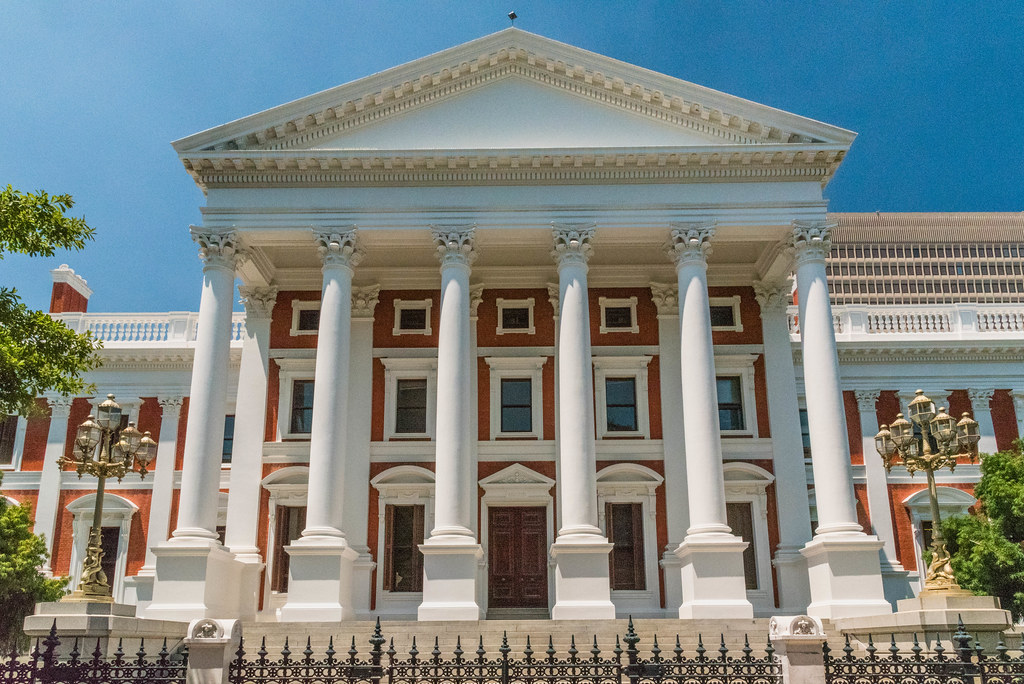
National Library of South Africa
The National Library of South Africa traces its origins to 1818. That year, Governor Lord Charles Somerset introduced a wine tax to raise money for public projects and used the proceeds to start Cape Town’s first public library.
The Library grew quickly, with its first major addition coming from Joachim Nikolaus von Dessin, who left his book collection to the Dutch Reformed Church in 1761. In 1820, the trustees handed the Dessinian Collection to the new library. Over time, more major donations followed, including Sir George Grey’s exceptional collection of medieval and Renaissance manuscripts and rare books in 1861.
In 1873, the Library became the legal deposit for the Cape Colony. Publishers had to send copies of all books, newspapers, journals and documents to ensure that local knowledge remained preserved. After the formation of the Union in 1916, the Library began receiving every printed item published in South Africa. This role continues today.
You will find the NLSA in the Company’s Garden. Its collections include rare manuscripts, South African publications, periodicals, government documents, maps, technical reports, Africana, newspapers and photographs. Many items are available digitally. Others can be requested in the Reading Room. Staff may supply cotton gloves and a cradle when you handle very old or fragile material.
The Library also manages the Centre for the Book, which promotes writing, publishing, reading and book distribution in all official languages. Entry and research are free. You only pay for photocopies.
The National Library remains one of Cape Town’s most valuable research resources and a genuine cultural treasure.
An interesting fact is that there is a well in the library basement that gets water from Table Mountain. This is a potential danger to the books, and water is pumped out 24/7
5 Queen Victoria Street, Cape Town
Is this your business?Claim it now.
Make sure your information is up to date.Colourdots is an independent Western Cape regional information resource. Learn more about the site here.