
Cape Town’s Minstrel Carnival Explained
The Kaapse Klopse, officially known as the Cape Town Minstrel Carnival, is one of Cape Town’s oldest and most recognisable cultural traditions. It takes place every year on 2 January, a day known locally as Tweede Nuwe Jaar (Second New Year). On this day, brightly dressed troupes parade through the city streets, filling Cape Town with music, colour, and movement.
The roots of Kaapse Klopse lie in the history of slavery at the Cape. During the colonial period, enslaved people were required to work on 1 January while their enslavers celebrated the New Year. On 2 January, enslaved people were given a rare day off. They used this day to gather, sing, dance, and celebrate in their own way. Over time, this informal celebration became a powerful tradition passed down through generations.
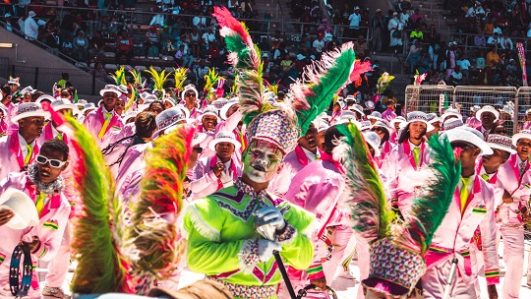
After slavery was abolished in 1834, former slaves and their descendants continued the Tweede Nuwe Jaar celebrations. Groups of performers began organising themselves into troupes, known as klopse. These troupes marched through the city, creating music and performances that reflected a shared identity and history. What began as an act of survival and expression slowly evolved into a structured carnival.
In the mid-19th century, visiting American minstrel groups influenced the developing tradition. These shows introduced brass instruments, marching formations, and performance elements that were adapted locally. Over time, Cape Town’s minstrels created a distinct style that blended African rhythms, European musical forms, and local Cape traditions. The result was something unique to the city.
By the late 1800s, the carnival had become more formal. The first organised troupe is believed to have formed in 1887. In 1907, the Green Point Cricket Club hosted the first structured carnival event. From there, competitions, judging, and set performance venues became part of the tradition. Brass bands, Malay choirs, and ghoema drumming became central to the sound of Kaapse Klopse.
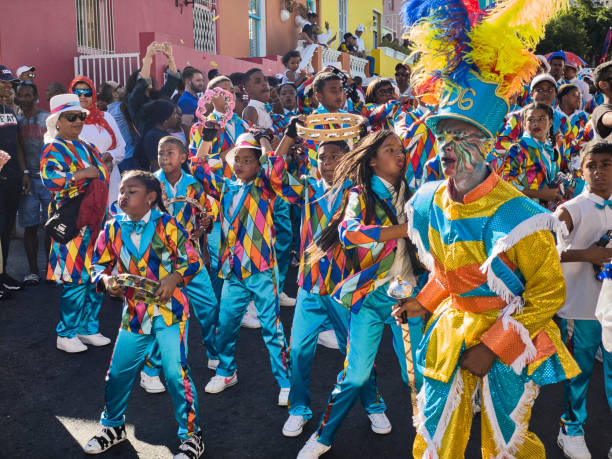
Today, the Kaapse Klopse parade is held in early January and marks the start of several weeks of competition. The main street parade, currently organised by the Kaapse Klopse Carnival Association (KKKA), runs through Cape Town’s city centre, often from Green Point towards the stadium. Thousands of spectators line the route to watch the troupes march, dance, and perform.
The performers wear bright satin outfits, top hats, and carry colourful umbrellas. Faces are often painted, and each troupe has its own colours and style. Music fills the streets, led by the distinctive ghoema drum, supported by banjos, trumpets, trombones, and singing. At the front of each troupe are voorlopertjies — dancers who lead with energetic and often playful movements.
For many participants, Kaapse Klopse is the highlight of the year. Troupes spend months preparing their routines, songs, and costumes. Much of this preparation happens in community halls and neighbourhood spaces, especially in Cape Flats communities. Performers range from young children to elders, making it a deeply intergenerational event.
After the street parade, troupes compete in stadium performances, where judges score them on marching, dancing, singing, musical skill, and overall presentation. While competition is taken seriously, the event remains rooted in community pride rather than individual fame.
Kaapse Klopse also plays an important role in youth development. It offers young people a creative outlet, a sense of belonging, and an opportunity to perform on a large public stage. Beyond performance, the carnival supports a wide network of small businesses, including costume makers, musicians, transport providers, and food vendors, many of them township-based.
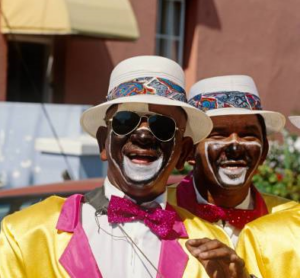
Under apartheid, the carnival was officially referred to as the “Coon Carnival”, a term now recognised as offensive. Since then, the event has been formally renamed the Cape Town Minstrel Carnival, reflecting a broader effort to respect its cultural significance and history.
At its core, Kaapse Klopse is more than a parade or competition. It is a living tradition that speaks to resilience, creativity, and cultural survival. What began as a single day of freedom during slavery has become a defining part of Cape Town’s identity. Each year on Tweede Nuwe Jaar, the city pauses to watch its history move through the streets — loud, colourful, and unmistakably Cape Town.
- Colourdots is an independent regional information resource for the Western Cape.
Learn more about the project HERE
