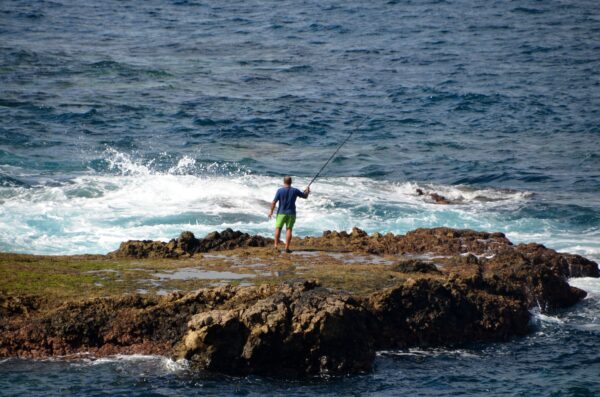
A Practical Guide to Common Fish Found along the Western Cape Coast Fishing in the Western Cape offers diverse opportunities, ranging from the cold Atlantic up the West Coast to the warm Indian Ocean and estuaries in between. These support a wide range of sought-after gamefish. Knowing how to identify fish species is essential for ethical angling, meeting size and bag limits, and protecting local biodiversity. This guide provides anglers with quick, practical references, species images, identification tips, and fishing information. Some of the best fishing areas include West Coast – Elands Bay, Paternoster, St Helena Bay, Langebaan Lagoon Dwaskersbos Cape Peninsula Cape Point, Hout Bay, Blouberg, Kalk Bay False Bay – Muizenberg, Gordon’s Bay, Simon’s Town South Coast (Western Cape section) – Struisbaai, Arniston, Witsand Angler’s Identification Guide Snoek (Thyrsites atun) Appearance: Long, slender, silver-blue body with sharp teeth. Habitat: Cold Atlantic waters, often in large shoals off the West Coast and Cape Point. Best Season: Winter to early spring. Regulations: No size limit; bag limit 10/day. This fish is a strong, aggressive fighter. It is an excellent table fish. Caught trolling, jigging, or with bait. Fishing in the snoek season is a massive affair for the smaller towns dotted along South Africa‘s Western Cape. Many people depend on the snoek run for an income. Very few commercial boats go out with rods and reels. Experienced fishermen know that the best way to catch snoek is on a handline Galjoen (Dichistius capensis) Appearance: Deep-bodied; colour ranges from black in rocky areas to bronze-silver in sandy zones. Habitat: Rocky reefs in the surf zone. Best Season: Winter months on the West Coast. Regulations: Min size 35 cm; bag limit 2/day; closed season 15 Oct–end Feb. This is South Africa’s national fish. It is a strong fighter that should be released during breeding. Bronze Bream / Hottentot (Pachymetopon blochii) Appearance: Bronze to dark brown body, small mouth, and high back. Habitat: Kelp beds, rocky reefs, and tidal pools. Best Season: Year-round, more active in cooler months. Regulations: Minimum size 22 cm; bag limit 10/day. This fish is often caught on small baits, such as mussels and worms; it is abundant and good for eating. Spotted Grunter (Pomadasys commersonnii) Appearance: Silvery-grey body with small dark spots. Size: Up to 9 kg; common 1–4 kg. Habitat: Estuaries, river mouths, sandy bays. Best season: Spring to summer. This fish prefers crustacean baits and needs gentle handling for release. Red Roman (Chrysoblephus laticeps) Appearance: Bright red body, robust shape. Size: Up to 5 kg; common 1–3 kg. Habitat: Rocky reefs, kelp beds. Best season: Year-round This is a slow-growing fish; it is recommended that you release large breeding fish. Elf / Shad (Pomatomus saltatrix) Appearance: Silvery body with blue-green back and forked tail. Habitat: Surf zones and estuary mouths. Best Season: Summer along the south and east coasts. Regulations: Minimum size 30 cm; bag limit 4/day; closed season 1 Oct–30 Nov in some areas. This fish is a strong predator. It is a good sport fish, but watch out for its sharp teeth. Cob / Kabeljou (Argyrosomus japonicus) Appearance: Bronze-silver elongated body. Habitat: Estuaries, surf zones, and reefs. Found in estuaries and surf zones, strong fighters—popular among shore anglers Size: Up to 1.8 m, 75 kg; common 3–15 kg. Best Season: Winter in the Western Cape. Regulations: Minimum size 50 cm (west of Cape Agulhas); bag limit 5/day.Popular target, know the size limits to protect stocks. Size & Limits: West of Cape Agulhas: minimum size 50 cm; bag limit: 5/day This good table fish is one of the most prized surf catches. Eagle Ray (Myliobatis aquila) Appearance: Diamond-shaped pectoral fins, long whip-like tail. Habitat: Sandy bays, estuary mouths, and reefs. Best Season: Year-round. Regulations: No size/bag limit, but best released. This is a Strong fish requiring heavy tackle. White Steenbras (Lithognathus lithognathus) Appearance: Silvery body with faint stripes, blunt snout. Habitat: Surf zones, sandy bays, and estuaries. Best Season: Summer and autumn. Regulations: Minimum size 60 cm; bag limit 1/day. This is a vulnerable species. It is recommended that you release large breeding fish. Cape Gurnard (Chelidonichthys capensis) Appearance: Armoured head, reddish body, large pectoral fins with bright blue spots. Habitat: Sandy and muddy bottoms offshore and inshore. Best Season: Year-round. Regulations: No specific limits. This fish often called “Poor man’s sole” is a good eating fish. It can “walk” on the seabed using its fin rays. Grey Mullet (Mugilidae spp.) Appearance: Slender, silver body with forked tail; small mouth. Habitat: Estuaries, lagoons, and surf zones. Best Season: Year-round. Regulations: Minimum size 30 cm; bag limit 5/day. Although this fish can be difficult to hook!White Stumpnose (Rhabdosargus globiceps) Appearance: Silver body with faint vertical bars. Juveniles frequent estuaries and lagoons Habitat: Sandy bays, estuaries, and surf.Rocky reefs and beaches. Best Season: Summer months. Regulations: Minimum size 25 cm; bag limit 10/day. This fish is popular; it takes small baits readily. It is considered vulnerable; populations have declined by over 30%, Please observe local bag and size limits due to conservation concerns . Fishing in the Western Cape Blacktail (Diplodus sargus capensis) This fish is also called dassie or Cape blacktail, is a common inshore species around rocky areas, tidal pools and reefs and shallow water, often near kelp beds. Common along the West Coast and False Bay Appearance: Deep, oval body that’s laterally compressed. Silver-grey with faint vertical bars along the sides Size: Commonly 20–35 cm, but can reach around 45 cm in deeper waters. Best season: Year-round Legal limit: Min size 20 cm; bag limit 5/day. Best bait: sand or mud prawn, mussel, chokka strips or bits of pilchard. Best tackle: Light to medium tackle for more sporThey bite quickly and can strip bait fast, and strike promptly. They are often caught when targeting other species like galjoen or hottentot. They put up a spirited fight for their size This fish is also called dassie or Cape blacktail, and is a common inshore species around rocky areas, tidal pools and reefs and shallow … Continue reading Fishing in the Western Cape