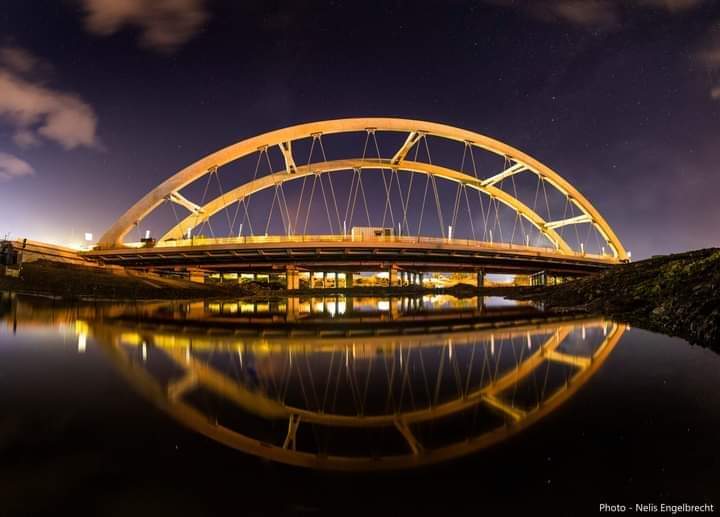
The Ashton Arch Bridge
The Ashton Arch Bridge was commissioned due to the regular flooding of the Cogmans River, which repeatedly affected Ashton and the surrounding farms. Major floods in 1981 and 2003 caused significant economic disruption. During the January 1981 flood, the Ashton canning factory was inundated by up to 2 metres of water at the height of the summer harvest. High-water marks are still visible in some buildings, and nearly 50% of the wine-grape crop was lost. Downstream near Van Loveren Wines, the river reportedly spread more than a kilometre wide.
In 1937, the Cape government built two bridges over the Cogmans River on Ashton Main Road. The main bridge spanned 100 metres and consisted of five earth-filled concrete arches, allowing only single-lane traffic. A second, smaller bridge crossed a nearby channel. In 1951, the main bridge was widened to accommodate two-way traffic, while the second bridge was later submerged as the river shifted into a single channel.
The Ashton Arch Bridge was built to address ongoing flood damage and frequent road closures along this busy tourist route. Approximately 7,000 vehicles pass through Ashton daily, with an additional 3,600 using the Cogmanskloof Pass and Montagu route. During the rainy season, the road was often closed for repairs, impacting travel and the local economy.
A concrete tied-arch (bow-string) design was selected. The 110-metre-long bridge was completed in 2021 and carries four traffic lanes and two pedestrian pathways. Its single-span design removes supports from the river, improving water flow compared to the old bridge’s piers. Designed for a 100-year lifespan, the Ashton Arch can withstand a 1-in-200-year flood and has become a landmark that respects both the scenic route and its historic character.