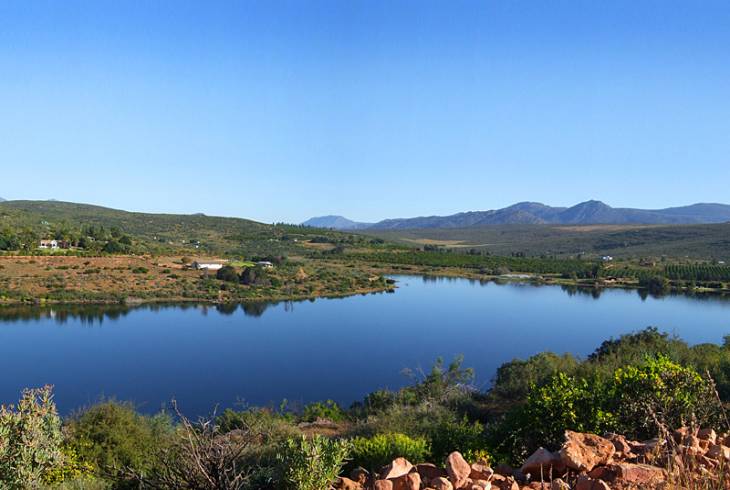
Clanwilliam Dam
Clanwilliam Dam is a concrete gravity dam on the Olifants River near Clanwilliam. Originally completed in 1935, the dam wall was raised to its current height of 43 metres in 1964. Its primary purpose is to supply irrigation water to agricultural areas downstream, supporting farming across the Olifants River Valley. The dam currently has a storage capacity of approximately 121.8 million cubic metres.
Plans to raise the dam wall further have been under consideration for many years. A formal feasibility study, completed in 2008 by the former Department of Water Affairs and Forestry, identified a growing need for improved water security in the region. The report highlighted increasing agricultural demand, pressure to allocate water to resource-poor and historically disadvantaged farmers, and the fact that the dam was spilling almost every year at the time.
In 2015, an infrastructure development company was appointed to oversee contract and project management for the dam-raising scheme. The approved plan involves raising the dam wall by 13 metres, which will increase storage capacity by an estimated 70 million cubic metres and almost triple the dam’s water yield. While initially scheduled for completion in 2018, the project has faced repeated delays due to procurement, funding, and administrative challenges. The expected completion date is now May 2028. Project costs have increased significantly, rising from an initial estimate of R2.2 billion to approximately R5.6–R5.7 billion. The national Department of Water and Sanitation has confirmed its commitment to accelerating the project, which has been identified as a key catalytic development for the Cederberg Municipality.
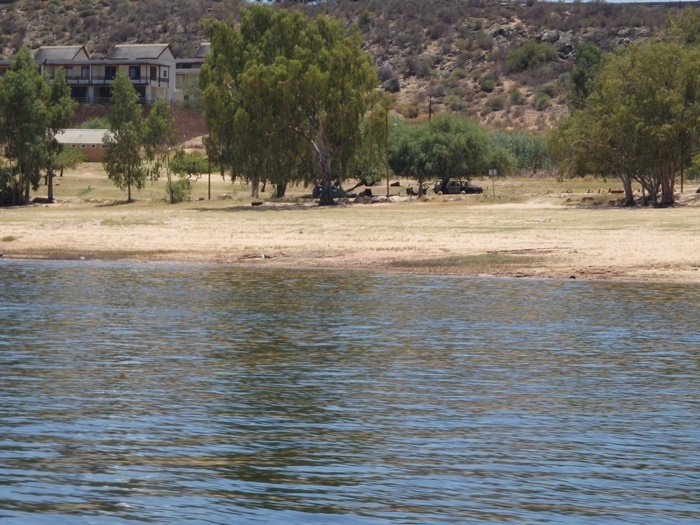
Beyond its role in water supply, Clanwilliam Dam is a major recreational asset. The resort on its banks is a popular weekend and holiday destination, offering chalets and camping facilities, many with views over the water. The dam is widely regarded as the most popular water skiing destination in the Western Cape. Also, she attracts anglers with regular competitions hosted by the local angling club, including the well-known Bass Classic in October. Nearby, Ramskop Nature Garden and its walking trails showcase a wide variety of indigenous flowers, particularly striking during the spring flowering season in August and September.
Freshwater fishing species in the Western Cape are explained in our illustrated guide
The dam-raising project is expected to benefit local farmers, households, and industry, while also creating economic opportunities for local businesses during the construction phase.